
BHUBANESWAR: In the cyclone-torn colonies of Penthakata slum in Puri, lives of at least 30,000 people have turned upside down. The colonies, inhabited by fishermen and their families, suffered extensive damage as winds gusting up to 200 km/hr ripped off tin roofs, uprooted trees, snapped wires, broke trawlers and tangled both nets and lives.
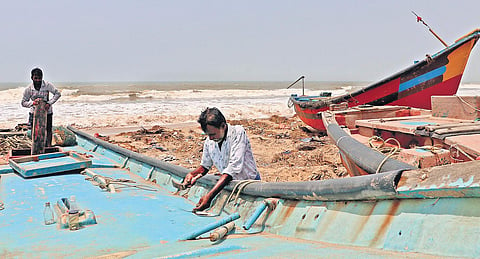
The narrow by-lanes, dotted with a few pucca houses and several shanties, got further shrunk by the debris of cyclone-ravaged objects and structures. The seashore was littered with waste and occupied by at least 1,000 fishing trawlers or boats, some awaiting repair and others waiting for the return of normalcy.
According to the fishermen, there are 800 small boats and 200 trawlers which steer the livelihoods of people living in 56 Telugu-dominated colonies along the shore. While some of the boats have suffered minor damage, others were completely broken. Not waiting for the Government to take action, the fishermen have started repairing their boats. But the recovery isn’t an easy task.
“It takes 50 people to move one big boat. So, the repair of all boats will take a lot of time. We can’t use any machines to lift the boats now as there is no electricity,” said V Ruben, a resident of Vankalla colony. Ruben, along with two other fishermen, was slathering locally-made glue on a boat’s surface to fix the broken parts.
Rebuilding livelihood is a challenge in itself. With most of the boats, anchors and fishing nets damaged, the fishermen wouldn’t be able to venture out to the sea at least for two months. “On an average, a fisherman’s family earns `10,000 per fishing season. We are hardly able to save any money for difficult times. The earnings are spent to meet daily expenses. Also, there are months when fishing is banned. We don’t have any alternative source of income,” said 40-year-old CH Yella Rao, a resident of Peduru colony.
Even if the boats of some fishermen didn’t suffer major damage, they wouldn’t be able to go for a catch until there is ice in the godowns. In the absence of electricity, all freezers have gone dry. In such a scenario, the men were busy repairing boats while women stepped out to work as labourers in the nearby areas. They were earning some money by clearing debris from houses of the rich.
Most of the families claimed to have received scanty relief supplies. While some of the houses were provided with tarpaulin sheets to cover the roofs, others received nothing. Fishermen, who had no ration cards, were apprehensive if they would receive any relief supply at all.
