
KENDRAPARA: The seven-month long fishing ban in Gahiramatha Marine Sanctuary, the world’s largest rookery of the endangered Olive Ridley turtles, will begin from Friday.
The sanctuary is a prime feeding area for Olive Ridleys which nest all the way up to Nasi-1 and 2 islands within Gahiramatha beach. Trawlers and boatmen have been directed not to fish within 20 km from the coastline in the sanctuary covering 68 km from Hukitola to Dhamara, informed forest range officer of Gahiramatha Debashis Bhoi. Forest guards have already been deployed to keep a close watch on fishermen violating the ban.
Every winter, lakhs of Olive Ridleys come to Gahiramatha coast for laying eggs. Bhoi said the turtles will arrive in November for mating in the sea. Later, the female Olive Ridleys will lay eggs in March. “We have already set up 16 turtle protection camps including three offshore ones at Agaranashi, Barunei and Babubali islands. Personnel of marine police stations at Kharinashi and Paradip besides the Coast Guards will help Forest officials in preventing illegal fishing this year,” he said.
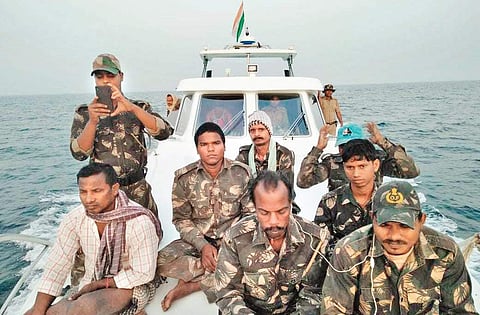
This apart, the Forest department has deployed two interceptor boats to prevent fishing vessels from entering the sanctuary. Both the speed boats were procured from Mumbai at a cost of `3 crore each three years back.
Around 4.70 lakh Olive Ridley turtles laid eggs at Nasi-1 and 2 islands from February 26 to March 5 this year, informed the forest officer. During the the ban period last year, Forest officials had seized 102 boats and trawlers and arrested 832 fishermen on charges of illegally fishing in the prohibited areas.
Gahiramatha coast attracts huge number of sea turtles every year from far off places for nesting. The fishing ban will remain effective till May 31 next year.
