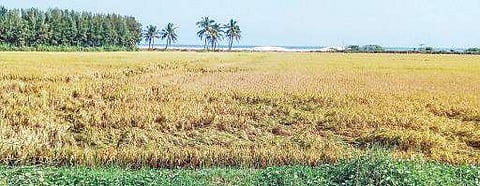

KAKINADA : Cultivable land in East Godavari district continues to shrink. It may not pose an immediate problem for the State’s food security but its long-term effect could be disastrous with the State needing more and more food grains to support its growing population.The decrease is mainly attributed to diversion of cultivable land for non-agricultural purposes, including construction, industries and other development activities. More and more farmers in East Godavari district are shifting to aquaculture if the steady increase in the extent of fish tanks as well as the quantum of inland fishing in the district is any indication.
With weather gods playing truant, 2017 has been a bad year for farmers in East Godavari district. The area under cultivation has come down sharply and the production of food grains fell short of the targets fixed in the beginning of the year.The 2017 had been a peculiar year for farmers with the speculative weather conditions keeping them on tenterhooks throughout the year.
The delay in the onset of monsoon, held up the sowing operations, the continued dry spell and excess rainfall had a telling impact on the production of food grains during the year. As per 2007 statistics, the area under cultivation in the district was 2.82 lakh acres in 2007, but now it has decreased to 2.32 lakh acres. The area under cultivation of sugarcane decreased from 17,010 acres in 2007 to 12,467 acres in 2017 and the area under cultivation of gingelly decreased from 1,460 acres in 2007 to 382 acres in 2017. Similarly, the area under cultivation of chilli crop has decreased from 789 acres to 296 acres and onion from 259 acres to 459 acres.
On the other hand, crops such as cotton, pulses, banana, and vegetables have made significant inroads into the delta crop culture at the expense of paddy. The area under cultivation of cotton crop has increased from 10,468 acres in 2007 to 20,754 acres in 2017.Meanwhile, agriculture experts expressed concern over shrinking of farm land and suggested enacting legislation to stop transfer of land for non-farming purposes.
Agriculture Deputy Director V T Rama Rao said shrinking of farm land is a matter of concern. “Though the shrinking of farm land is not alarming right now, if the trend continues it can pose difficulty as agriculture is the mainstay of our economy,” he said.
Worrisome trends in agriculture
The shortage of labour and lack of mechanisation has made farming harder and farmers are slowly selling land to real estate developers in and around the city
Storage and marketing facilities are unscientific while industrial and domestic pollution levels have risen high impacting agricultural prospects
Fish and prawn ponds spread in an extent of 15,000 acres in Konaseema area
10,000 acres allocated to SEZ in coastal area
Worrisome trends in agriculture
The shortage of labour and lack of mechanisation has made farming harder and farmers are slowly selling land to real estate developers in and around the city
Storage and marketing facilities are unscientific while industrial and domestic pollution levels have risen high impacting agricultural prospects
Fish and prawn ponds spread in an extent of 15,000 acres in Konaseema area
10,000 acres allocated to SEZ in coastal area
