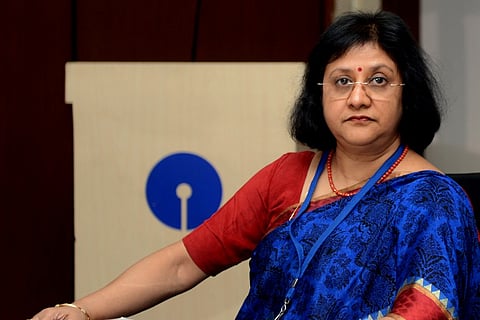

It’s being widely tipped that Arundhati Bhattacharya is being considered for the Reserve Bank of India (RBI) governor’s post when the present incumbent Raghuram Rajan ends his term on September 4. If she indeed makes it, she will have broken through the proverbial glass ceiling.
For the Reserve Bank of India has been a boys club. The bank was established 86 years ago and has had 23 governors. Not one woman among them.
In fact, the central bank lacks female representation in its upper echelons, with just three of the 57 deputy governors being women.
In 2003, K J Udeshi became the first woman deputy governor of RBI and served from June 2003 to October 2005. Subsequently, Usha Thorat served for five years from 2005 till 2010 and Shyamala Gopinath was deputy governor for seven years from 2004 to 2011.
Arundhati Bhattacharya is probably the first woman to even be considered for the top job. And if indeed she lands the job, it will also be the first time that a banker gets to steer the banking regulator. So far, all RBI governors have been either economists or bureaucrats.
If she does make it, Arundhati Bhattacharya will join a limited list of women who have had the opportunity of steering the monetary policies of nations or multilateral institutions. This list includes Janet Yellen, the first woman to head the US Fed, and Christine Lagarde, the first woman chief of the International Monetary Fund (IMF).
Globally, when it comes to central banking, women are a minority. A mere 15 of the world's 177 central banks were headed by women, either on an interim or full-time basis.
Interestingly, developing countries like South Africa, Sri Lanka and Botswana have taken the lead in choosing women to chart their monetary policies.
Bhattacharya became the first woman chairperson of SBI in October 2013. But by then two of India’s top four banks were already being run by women: Chanda Kochar at ICICI and Shikha Sharma at Axis Bank.
Even at state-owned banks, the glass ceiling had already been broken. Tarjani Vakil became the first woman to head an Indian bank, Exim Bank, in 1993. Ranjana Kumar had already become chairman and managing director of Indian Bank. The succeeding years saw others ascend to the top like Shubhalakshmi Panse at Allahabad Bank, Vijaylakshmi R Iyer at Bank of India,
Archana Bhargava at United Bank of India and Usha Ananthasubramanian at Punjab National Bank.
Analysts say women in finance can provide direction, establish policy-based governance and perform fiduciary duties protecting assets and investments, even if it means questioning and challenging the management's decisions. Perhaps this is why governments across the globe are realising the need to have at least one female member in banks to reflect gender diversity.
But being the head of a central bank is not easy. The challenge lies in administering the right monetary medicine to keep the country's economy robust, keeping the policy framework in sync with global developments without hurting domestic growth, understanding the rationale behind the economic, social and political moves of other economies and their impact on India’s businesses and economy.
"Arundhati is an outlier. I give visionaries especially Vaghul of ICICI Bank credit for populating and promoting women in their organisations ahead of their time. Nowadays, the glass ceiling has been shattered in most fields. The velocity of women’s participation in the workforce is unstoppable," says Shobana Kamineni, executive vice-chairperson of Apollo Enterprises.
Incidentally, Arundhati Bhattacharya's term as boss of State Bank of India (SBI) is set to expire in September although speculation is equally rife that she may get another term in the SBI in view of its proposed merger with five associate banks. The merger, which is expected to be completed by next March, will position SBI among the top global 50 banks, a first for any Indian lender.