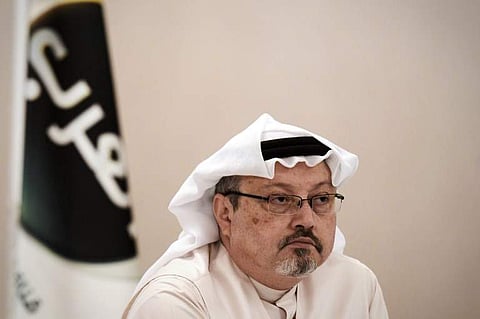

“Saudi Arabia wasn’t always this repressive. Now it’s unbearable,” read the headline of a Washington Post piece by journalist Jamal Khashoggi in September 2017. Over the last year, Khashoggi wrote a series of columns on Saudi Arabia’s violation of human rights, in which he spoke of the widespread arrest of activists and reformers who challenged the monarchy.
None of his pieces moved Silicon Valley tech companies enough to sever ties with Saudi Arabia, a country that has massive investments in America’s tech hub. But all of a sudden, Khashoggi’s gruesome murder at the Saudi consulate in Istanbul earlier this month, believed to be orchestrated by Saudi’s monarchy, has put the spotlight on Silicon Valley’s blood money, leaving the tech industry in a quandary.
Earlier this year, Saudi prince Mohammed bin Salman visited Silicon Valley, and was photographed with the biggest stars of the tech world as they showed him around their offices. The crown prince was often referred to by his initials, MBS.
Over the last month, the acronym has come to stand for Mister Bone Saw, a reference to the manner in which Khashoggi’s body was allegedly dismembered and disposed off.
While it’s unlikely that Silicon Valley was completely unaware of Saudi Arabia’s abysmal human rights track record before Khashoggi’s death, it has now become impossible to ignore.
Sam Altman, president of Y Combinator, a start-up incubator, has suspended his involvement as an advisor for Saudi’s new smart city, Neom.
Uber CEO Dara Khosrowshahi and Google Cloud CEO Diane Greene were among the business leaders who pulled out of Saudi Arabia’s investment conference, popularly called “Davos in the Desert” that started on Tuesday.
Masayoshi Son, CEO of Japanese firm SoftBank, cancelled plans to speak at the conference. A large share of Saudi investment in Silicon Valley has been funnelled through SoftBank’s $100 billion Vision Fund, which received $45 billion from the Saudi Public Investment Fund (PIF).
The Saudi fund has also invested directly in companies. Uber has, in the past, received $3.5 billion from the PIF.
In an attempt to figure out whether Saudi Arabia’s massive investments in Silicon Valley had purchased the silence of tech companies over the country’s human rights violations, author Anand Giridharadas writes in an opinion piece for The New York Times that he reached out to several tech companies that received significant money from Saudi Arabia’s PIF.
“I asked Uber, Wag, DoorDash, Katerra, WeWork, Slack and Plenty if there was any aspect of Saudi Arabia’s conduct in Mr Khashoggi’s apparent murder that the company disavowed,” Giridharadas wrote, “Or, I asked, does the investment from PIF come with an expectation of remaining silent about Saudi conduct? All of the companies either declined to respond at all, or responded with a refusal to comment on the record about the Saudi kingdom’s behavior.”
HBO’s comedy serial Silicon Valley mocks tech giants over their constant claims of “making the world a better place.”
“If the Valley is sincere, that it will ‘change the world’ and ‘do the right thing, period,’ then the Saudi government’s billions of dollars in investment capital should be returned, and Silicon Valley companies should refuse any further investments,” wrote Giridharadas.
In a piece for Slate, Charles Kenny, senior fellow at the Centre for Global Development, calls Giridharadas’s proposal “a new form of international boycott — one that involves refusing to accept cash rather than the more traditional approach based on refusing to hand it over.”
As many tech firms that Saudi Arabia has invested in are private, he says this would involve a more straightforward process than for companies listed on the stock exchange.
He points to close ties between Saudi Arabia and the US, which make the US government-led sanctions against Saudi Arabia unlikely. Saudi Arabia is the largest buyer of US weapons, both countries are involved in military and intelligence cooperation and both are distasteful of Iran. And then there’s Saudi investment in President Donald Trump’s business.
Kenny points to consumer and institutional boycotts as an alternative to government sanctions. While the traditional method involves a refusal to buy or invest in a country, as was done to South Africa’s apartheid regime, Kenny believes this method won’t work for Saudi Arabia.
“Consumers don’t know where their gas comes from when they pump it at the station, and anyway, little Saudi gas oil makes it to the US,” Kenny wrote, adding that there is no point refusing to invest in Saudi firms, as the country is “desperately trying to find investment opportunities for its surplus cash.” According to him, the only option left is Giridharadas’s proposal of refusing to take Saudi money.
As many writers have pointed out, pulling out of a conference in Saudi Arabia, or from the advisory board of a yet-to-be-built Saudi city, are easier prospects than returning Saudi money.
Silicon Valley’s biggest stars have long prided themselves on their liberal, progressive values. One hopes that Khashoggi’s murder will push them to put their money where their mouth is.
(The author is an independent journalist based in the San Francisco Bay Area. She tweets at @newspaperwalli)
