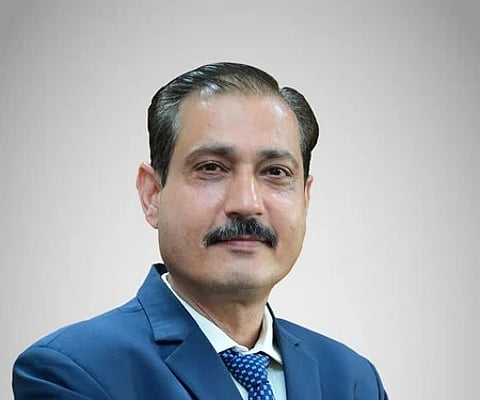

ASHUTOSH-P-INTERVIEW072241.JPG
Center-Center-DelhiWhile it may not be a household name, TKIL Industries Pvt Ltd (formerly Thyssenkrupp Industries India) has been the force behind the construction of some of India's largest cement plants for over four decades. In an exclusive interaction with Dipak Mondal, TKIL Industries’ head of Cement Business Ashutosh Pandita shed light on the company's pivotal role in the cement sector and its bullish outlook on India's infrastructure-driven growth. Excerpt:
Give us a brief overview of TKIL Industries and its role in the cement sector.
We are an old company, established in 1947, formerly known as Thyssenkrupp Industries. Now we are TKIL Industries Private Limited. Our cement business started in the 1980s, and over the last four and a half decades, we have built plants ranging from 650 tonne per day to 11,500 tonne per day. We provide end-to-end solutions—from design and engineering to supply and after-sales service. Our strength is German technology from Thyssenkrupp Polysius, backed by our decades of Indian expertise.
You have major clients, yet your name isn't very prominent. Is it because you are not a listed entity?
Yes, we are not a listed company, as of now. That is a factor.
Any plans for an IPO?
Not as of now. I have not heard such discussions. Things are ever-evolving, but nothing is cast in stone.
Who are your big clients in the cement industry?
We are associated with the who's who of the industry. We regularly supply plants to UltraTech, and we have ongoing projects and existing plants with Adani Group. We also work with Shree Cements, Wonder Cement, and in Southern India, with Ramco Cements and Madras Cements. We are present across the length and breadth of the country.
What is your outlook for the Indian cement industry?
I am very positive. With the government's push on infrastructure, I expect the industry to grow at 6-7% CAGR. Even a conservative 5% growth means adding 30 million tonne of capacity every year. This is huge and presents both an opportunity and a challenge for us to deliver faster and more efficiently.
Thyssenkrupp has exited your business. What is the relationship now?
While they have divested their equity, we have a perpetual licence agreement for their technology from Polysius. This relationship is key. Our core territory is India, Nepal, and Bangladesh. For projects outside this, like in the Middle East or Africa where we are currently executing projects, we consult with Thyssenkrupp Polysius on a case-to-case basis.
How important is sustainability for a capital goods company like yours?
It's not an issue, it's a topic that leads us to the national goal of net zero by 2047. We are on the right track. We supply energy-efficient grinding systems, fuel-efficient pyro processing, and alternate fuel feeding systems that allow customers to replace fossil fuels, reducing carbon footprint.
Are Indian companies less sensitive to sustainability than European ones?
I wouldn't say less sensitive. The industries are at different phases. Europe is mature with few new plants, so their focus is intensely on sustainability. India is still building capacity, but we are also seriously discussing and implementing ways to reduce carbon footprint for the long term.
Do you see consolidation in the fragmented Indian cement market?
Yes, the next 5-10 years are crucial. The industry faces enormous challenges — rising costs, market volatility, and geopolitical situations. We have already seen consolidation and I see more happening.
What are your Capex plans and revenue targets?
Project-wise, we don't need significant Capex as customer advances are pumped back into projects. However, we are investing in technological advancements and training. At a group level, we are targeting a 5x growth, from about Rs 3,500 crore to around Rs 16,000-Rs 17,000 crore in five years.
How are you adopting AI and digital technologies?
Our plants are digital-ready. We have packages enabling remote monitoring, real-time performance tracking, and predictive maintenance. These systems also feed equipment performance data back to our design rooms for continuous improvement.
Do geopolitical issues impact your supply chain?
Yes, directly and indirectly. Supply chains for certain components from Europe or China can be disrupted, impacting logistics. However, we have invested in flexible, alternate sourcing arrangements so we are not dependent on any single region.
