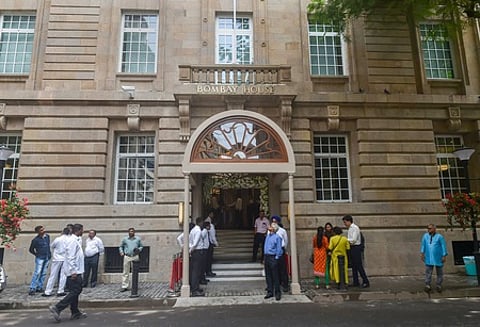

The tremors that shook the Tata Group in recent days may be an indication of deeper fault lines that have long remained hidden beneath its otherwise stable surface. For a conglomerate seen as the gold standard of corporate governance and ethical conduct, these developments serve as a reminder that even the most respected institutions are not immune to corporate governance turbulence.
At the heart of the current turbulence lies a breakdown of trust among the trustees of the Tata Trusts, the philanthropic entities that own about 66% of Tata Sons, the investment holding company of the Tata Group. As trustees struggled to resolve their differences through dialogue and persuasion, a model of quiet consensus and unanimous decisions has become a site of open disagreement. The tensions became evident when Vijay Singh, vice-chairman of Tata Trusts and a long-time trustee, revealed that a bloc within the Trusts had voted against his reappointment as a nominee director on the board of Tata Sons. He called the move “unprecedented” pointing out that such a vote went against the late Ratan Tata’s long-standing insistence on decision making through consensus and unanimity. His remarks revealed the tremors and the division within the Trusts, where voting, rather than consensus, has now become the means to resolve differences.
Rooted in philanthropy
The Tata group’s structure is uncommon in global capitalism. Tata Sons serves as the investment holding company, controlling 26 listed companies and a number of unlisted operating companies. The majority ownership of Tata Sons rests with the charitable Tata Trusts that channel dividends into philanthropy. The Trusts fund initiatives in health, education, livelihoods, and community development. The Trusts are currently chaired by Noel Tata, with six other trustees collectively responsible for its decisions. The board of Tata Sons, chaired by N. Chandrasekaran, has been widely credited with stabilizing the group in the recent past.
Governance and evolving equations
The relationship between the Tata Trusts and Tata Sons has always required careful balancing. The Tata Trusts, as majority shareholders, exercise their rights as defined in the Articles of Association (AoA) of Tata Sons. The AoA has been used by Tata Trusts to exert absolute control over Tata Sons to the detriment of the minority shareholders of Tata Sons. Firstly, the Trusts enjoy an affirmative right, a veto vote, on all key decisions of Tata Sons. Secondly, Tata Sons converted into a private company in 2017 limiting transparency and disclosures. Thirdly, despite the RBI regulations, Tata Sons has resisted a public listing. Such a listing would dramatically alter the group’s power equations. In the event of a listing, the influence of the Tata Trusts would diminish as ownership of Tata Sons became more dispersed, the AoA gets diluted and regulatory oversight becomes stringent. However, no one within the group, or the trusts, except the Shapoorji Pallonji (SP) group holding over 18.37% shareholding of Tata Sons, would be keen on the listing. The SP Group has sought for a public listing that would provide it an exit opportunity and a much-needed liquidity to pare its debt. This tension, between liquidity and legacy, continues to shape the relationship between the Trusts, the SP Group, and Tata Sons.
Another key reform separated the roles between the chairmen of Tata Sons and Tata Trusts, ensuring operational and philanthropic decisions remain distinct. Also instituted was a selection committee and board affirmation process for the appointment and removal of the Tata Sons chairman.
Managing disagreement without division
In any large organization, disagreements are inevitable. Divergent views among trustees or directors need not signal a crisis. Open debate and dissent, when handled within institutional frameworks, are signs of maturity. To label the current situation at the trusts as a coup or power struggle would be an oversimplification. The tremors can be seen as a test of how its governance model adapts to generational change and expectations of transparency and accountability beyond blind trust and reverence to one father figure like Ratan Tata.
The road ahead
The current tremors may therefore be less a sign of disintegration and more a moment of introspection. The trustees and directors who guide the Tata institutions would do well to recall that their ultimate accountability lies not in power equations, but in upholding a century-old governance ethos - the belief that capitalism must serve the nation.
One hopes that the trustees see that the underlying philosophy and glidepath for the Tata Trusts is to continue its charity efforts and let Tata Sons contribute financially to these efforts. The dispute amongst the trustees will test the equation between the Tata Trusts and Tata Sons. It will test the board of Directors of Tata Sons. For the Tata Group, this may be a chance to reaffirm that trust, the very word embedded in the name of its apex philanthropic body, remains its strongest asset.
Shriram Subramanian is founder of proxy advisory firm InGovern Research Services
