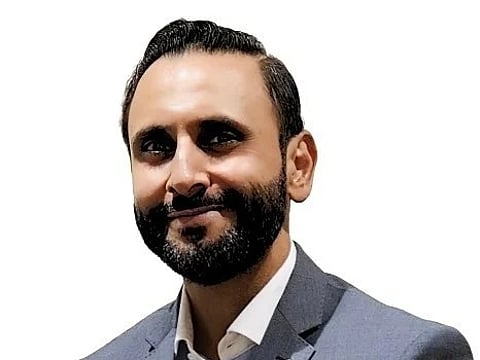

NEW DELHI: As global investment avenues open up and Indian high-net-worth individuals (HNIs) look beyond domestic markets, interest in overseas investment, family offices, and golden visa programmes is rising steadily. In this conversation, Inderbir Singh Jolly, CEO of PL Wealth Management, speaks with The New Indian Express about emerging trends among India’s wealthy, the appeal of foreign jurisdictions, and how next-generation investors are shaping global wealth management.
There is a growing trend of investors wanting to put their money across geographies, not just in India—whether in equities or debt. Given the current restrictions on overseas investments, do you think there’s a need to review these limits?
Overseas investment is still a niche space. While it’s gaining prominence from an information perspective, execution remains limited—mainly to the US and family office setups. However, global equity opportunities are increasingly available even for HNIs and mass affluent investors.
For instance, platforms like ICICI Direct and others, including us at PL, offer clients access to global equities through local managers who can help them invest in foreign markets.
When it comes to ultra-HNIs and family offices, the approach is more sophisticated—it involves tax planning, understanding international laws and treaties, and often setting up multi-family offices in markets such as Singapore and the UAE. These setups can be done via the Liberalised Remittance Scheme (LRS) route or organisational expansion.
Another growing area is domicile advisory—countries like Portugal offer residency or golden visas through investment opportunities. Many wealthy Indians are exploring these routes, along with immigration to countries like Australia and Canada, which naturally opens up investment avenues there.
Overall, while interest is rising, this space remains more relevant for those investing upwards of $150,000–$200,000. Mutual funds in India that feed into international funds also provide exposure to global markets. The trend will likely strengthen as the next generation—more global in their outlook—comes into play.
If someone sets up a family office in Singapore, what are the Indian laws that one has to comply with?
The family office would be governed by Singapore’s regulations, though Indian laws around fund transfers or asset movement would also apply. Typically, we work in collaboration with local partners—such as banks and advisory firms—to ensure compliance with both jurisdictions.
Does the $250,000 LRS limit apply when setting up a family office overseas?
Yes. Any money transferred abroad through the LRS route must comply with its limits and regulations. For larger setups requiring higher capital movement, other organisational or institutional routes are used. But there are no separate LRS rules specifically for family offices—investors must adhere to existing governance norms.
What role does GIFT City play in this ecosystem?
GIFT City provides an excellent opportunity for both domestic and foreign investors. It allows them to invest in India’s growth story while maintaining the same currency and benefiting from regulatory clarity.
If we can simplify processes and make it easier to set up and operate from GIFT City—much like Singapore or Dubai have done—it can become a major hub for attracting global capital and wealthy investors.
Among wealthy Indians pursuing golden visa programmes, which countries are most preferred?
European countries such as Portugal and Malta are particularly popular. Several EU nations offer residency or citizenship through investment. These programmes are attractive to investors seeking a base in Europe along with associated privileges like visa-free access across the region.
Why are Portugal and Malta so sought-after?
From the host country’s perspective, these programmes attract high-quality investors who bring capital, create businesses, and generate employment. For Europe, which relies heavily on tourism and limited industries, such schemes diversify economic growth and attract skilled individuals.
From the investor’s point of view, these programmes offer strategic advantages—residency, business opportunities, and a stronger passport.
Why are wealthy Indians seeking second citizenships?
There are three main reasons:
Geopolitical factors: The global environment is changing, and many want an additional safety net.
Mobility and access: Countries like Portugal offer passports with visa-free or simplified access to over 150 nations, which helps in travel, trade, and business.
Business opportunities: Dual citizenship provides the flexibility to invest, trade, or set up businesses abroad.
It’s a combination of security, convenience, and strategic diversification.
What kinds of investments are wealthy clients currently favouring?
HNIs today follow a blended, objective-driven approach. Their portfolios are typically structured as follows:
Core liquid assets: Global and Indian blue-chip equities, ETFs, and other easily tradable instruments.
Private markets: Direct investments in private equity and late-stage venture capital.
Real assets: Commercial and residential real estate, infrastructure assets, REITs, and InvITs.
Alternate and structured products: Private credit, market-linked debentures, and structured yield solutions.
Cash and liquidity management: Short-term opportunities for treasury or liquidity management.
Luxury and philanthropy: Investments in art, collectibles, and philanthropic causes.
Their strategies are tailored to balance growth, income, legacy planning, and tax optimisation.
You have managed family wealth for many years. How do you handle situations where family disputes arise over property or wealth?
Our primary role is to assist clients with investment-related matters. Personal or intra-family disputes are generally handled by their legal or tax advisors.
However, where required, we collaborate with a network of partners—estate planners, law firms, tax advisors, and investment bankers—to provide holistic family office services. We ensure professional handling and transparent support while staying within our advisory domain.
