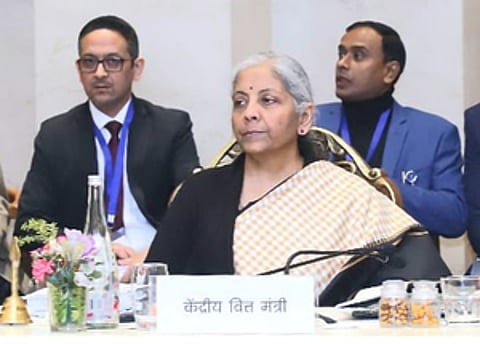

With the GST Council meeting beginning today, industries are hoping for a simplified structure and lower levies on goods and services. For consumers, particularly with the festive season around the corner, hopes are pinned on a reduction in prices of daily-use items.
The Centre has proposed a major restructuring of the Goods and Services Tax (GST) framework, with a proposal for a two-slab structure — 5% for essentials and 18% for standard goods — while retaining a 40% rate for luxury and sin products. As per the proposal, 12% and 28% tax slabs will be done away with.
According to the finance ministry sources, 99% of goods in the 12% tax slab will move to the 5% slab. Under this, household items, medicines and healthcare supplies may move into the 5% bracket.
“We have suggested a 5% tax on all pharmacy products. If taxes come down across the value chain, there would be lower input tax credit (ITC) arrears,” said Ramesh C Juneja, chairman of Mankind Pharma.
Aspirational items such as ACs, TVs and small cars could be shifted to the 18% slab from the current 28%, according to the Finance Ministry. The auto sector is also pushing for greater uniformity in taxation. The Automotive Component Manufacturers Association (ACMA) has urged to bring all auto components under one rate. “If duties are decreased, the price gap between genuine and spurious products would come down, making people buy genuine products,” ACMA said.
Meanwhile, high-end cars and tobacco are expected to attract a 40% tax. Media reports indicate the Group of Ministers (GoM) has proposed steep hikes on luxury electric vehicles priced above Rs 40 lakh —a move that could weigh on sales for global carmakers such as Tesla, Mercedes-Benz and BMW.
For models between Rs 20 lakh and Rs 40 lakh, the GST rate is to be 18%.
“The recent speculation about the change in GST rates has caused uncertainty in the minds of consumers, who have adopted a wait-and-watch policy. This has delayed decision-making and is impacting new vehicle sales at a certain level,” said Hardeep Singh Brar, president and CEO, BMW Group India.
On essentials, the Centre has confirmed that most of the items including clothes, apparels and footwear earlier taxed at 12% are likely to shift to the 5% slab. The Confederation of Indian Textile Industry (CITI) has suggested a uniform 5% GST across cotton, man-made fibre and blended products.
Industry hopes to get relief on IDS
As the GST Council convenes for a crucial meeting on September 3rd and 4th, where a major rate rationalization is on the agenda, a chorus of industry voices is calling for a resolution to the persistent problem of the inverted duty structure (IDS).
An inverted duty structure occurs when the taxes paid on inputs (raw materials and services) are higher than the tax levied on the finished product. This leads to an accumulation of unutilized Input Tax Credit (ITC), blocking crucial working capital for companies.
The issue has been raised by most industries, as companies have been unable to claim accumulated ITC due to inverted duty structure.
“The GST law has the provision to refund the unutilized ITC but this unnecessarily burdens businesses with higher tax cost, which leads to increase in prices for consumers. This issue may also be addressed,” says SBI in a report.