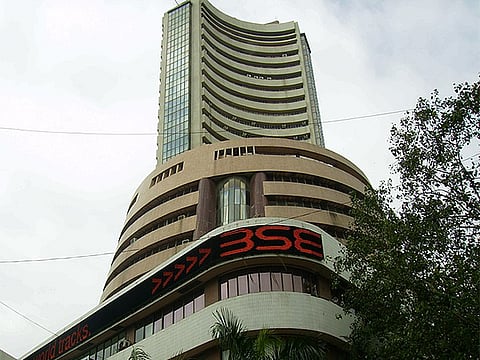

Weighed down by renewed US visa curbs, fresh tariff measures and relentless foreign fund outflows, India’s equity market slumped on Friday, marking a sixth straight session of losses. IT stocks have been reeling since Washington raised the H-1B visa application fee to $100,000 per applicant and pressure has now spilled over to the pharma sector after the US imposed tariffs on branded drugs.
The benchmark index BSE Sensex fell 733.22 points or 0.9% to settle at 80,426.46 on Friday while the Nifty dropped 236.15 points or 0.95% to settle at 24,654.70. Since September 19, the Sensex has lost 2,587 points or 3.16%, while the Nifty has declined 769 points or 3%.
The broader markets underperformed, with Nifty Midcap100 and Smallcap100 down over 2% each on Friday. The sharp decline over the past six sessions has made investors poorer by Rs 15.63 lakh crore as the market capitalisation of all BSE-listed companies has come down from Rs 466.89 lakh crore on September 19 to Rs 451.25 lakh crore on Friday.
The pessimism in the market has completely overshadowed positive domestic cues such as GST reform and gross domestic product (GDP) which grew 7.8% in Q1 (April-June) of FY26, marking a five-quarter high.
"The IT index came under early pressure amid concerns over rising H-1B visa costs, compounded by Accenture’s subdued outlook. Sentiment weakened further as fresh U.S. tariffs on pharmaceutical products led to a sharp sell-off in pharma counters. Mid- and small-cap stocks corrected more sharply than large caps, reflecting stress from their stretched valuations,” said Vinod Nair, Head of Research, Geojit Investments Limited.
Nair stated that the rupee continued to weaken, weighed down by ongoing FII outflows and heightened geopolitical risks stemming from U.S. trade actions. In contrast, gold sustained its appeal as a safe-haven asset, supported by global trade tensions, a depreciating rupee, steady central bank purchases, and uncertainty over the Fed’s policy path. Gold prices traded firm at Rs 1,14,000 on Friday while the rupee maintained levels above its record low of 88.7975 versus the US dollar.
Shares of top pharma companies fell by up to 7% on Friday after US President Trump announced a 100% tariff on imports of branded or patented drugs from October 1, unless the manufacturer is setting up a production facility.
On Friday, the Nifty Pharma index declined by 2.14% with shares of Laurus Labs, Biocon, and Zydus Life taking a plunge of up to 7%. Index heavyweight Sun Pharma, which has a big presence in the US market, fell 2.6% to settle at Rs 1,585.
Adding to the pressure is sustained foreign institutional investor (FII) selling. At the end of last week's trading session (September 19), FIIs sold equities worth Rs 180,443 crores through the exchanges. Early data states that FIIs have offloaded about Rs 19,550 crore this week. According to experts, FIIs are leaving India largely due to expensive equity valuations, better opportunities elsewhere (especially in China), weak earnings growth and persistent geopolitical uncertainties.
Commenting on pharma stocks, Ajit Mishra, SVP, Research, Religare Broking, said that the latest US move to slap a 100% tariff on branded and patented pharmaceuticals has shaken up the global pharma sector, especially Indian drugmakers. He added that for India’s pharma giants, this is a wake-up call to strengthen supply chains and explore US-based manufacturing, even as the sector’s core strength in affordable generics continues to support global healthcare.
Siddhartha Khemka, Head of Research, Wealth Management, Motilal Oswal Financial Services, said that globally, investors maintain their cautious stance ahead of US retail inflation data to be released later on Friday. Khemka expects markets to remain under pressure in the near term, tracking global headwinds, key macroeconomic data, and potential developments around the India–US trade talks.