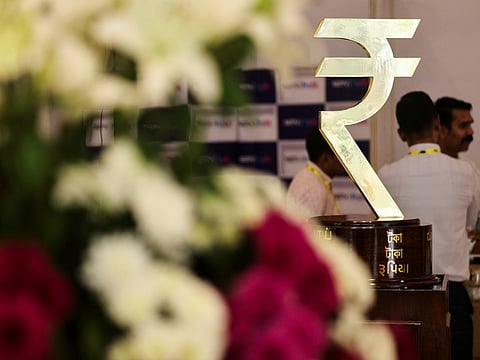

The Indian rupee is expected to remain under strong pressure this week and may test the ₹93.50 per US dollar level, as it faces what a Union Bank of India report describes as a “triple threat” of geopolitical tensions, rising crude oil prices, and a strengthening US dollar.
According to the report, the outlook for the rupee is “decidedly bearish,” driven by the breakdown of US-Iran diplomatic talks and heightened tensions in the Persian Gulf, including concerns over disruptions in the Strait of Hormuz. These developments have pushed Brent crude above $102 per barrel, intensifying pressure on India’s external balance.
The report highlights that the rupee’s near-term direction will largely depend on whether oil prices stabilise or continue to rise. While the Reserve Bank of India’s forex reserves of about $697.1 billion provide a buffer against excessive volatility, they may not fully offset sustained external shocks.
The currency has seen sharp swings in recent sessions, briefly recovering from record lows near ₹95.23 per dollar before weakening again toward ₹93.30. Much of this volatility has been linked to rapidly evolving geopolitical developments and their impact on global energy markets.
A temporary easing of tensions earlier in the week helped the rupee strengthen to around ₹92.40 as crude slipped below $100 per barrel. However, that relief proved short-lived after talks collapsed and fresh escalation fears triggered another spike in oil prices above $100, renewing pressure on the currency.
The report notes that crude oil remains the key macroeconomic driver for the rupee, given India’s dependence on energy imports. Higher oil prices are expected to widen the current account deficit and add to imported inflationary pressures, both negative for the currency outlook. It estimates that every $10 per barrel increase in crude could worsen India’s current account deficit by roughly $15 billion annually.
Adding to the pressure, the US dollar has strengthened amid safe-haven demand and elevated US bond yields, while foreign portfolio investors have reportedly withdrawn over $20 billion from Indian markets since February 2026.
Despite these headwinds, India’s strong forex reserves are expected to help smooth excessive volatility and prevent disorderly currency movements.
Overall, while RBI intervention may limit sharp swings, the broader bias for the rupee remains negative in the current global economic environment.
(With inputs from ANI)
