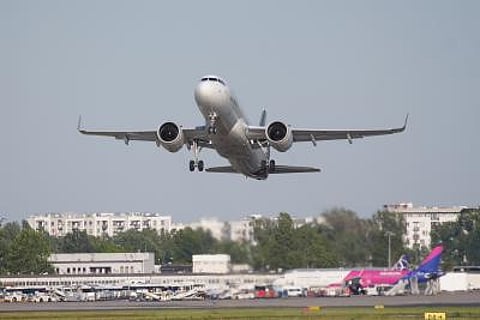

Days after major airlines wrote to the Centre that they are on the verge of shutting down operations due to a sharp rise in aviation turbine fuel (ATF) prices, industry experts said the impact of the ongoing crisis on the aviation sector is significant. They also agreed that fuel surcharges introduced by airlines are unlikely to fully offset the impact of elevated jet fuel prices, and margin pressures for airlines are likely to remain in the near term.
Ashish Chhawchharia, Partner and Aviation Industry Leader, Grant Thornton Bharat, told TNIE that the impact of the current crisis on airlines is significant, though difficult to quantify precisely at this stage. He added that carriers are expected to curtail operations during non-peak periods and on lighter-load sectors, particularly regional flights, as they weigh the high operating costs driven by elevated ATF prices against the expenses of grounding aircraft, such as lease payments, staff salaries, parking and maintenance.
“While many airlines have revised fuel surcharges to cushion the blow, these measures only partially offset the surge in fuel costs. The industry is under pressure to balance financial sustainability with service continuity. This makes government intervention increasingly critical to prevent deeper losses and widespread disruption,” said Chhawchharia.
In March, aviation passenger and cargo growth fell, reflecting war-related disruptions. Total passengers carried declined 1.3%, while cargo shipments remained flat.
Kinjal Shah, Senior Vice-President and Co-Group Head, Corporate Ratings, ICRA Limited, said the Indian aviation industry is currently grappling with several challenges. She added that fuel surcharges provide only partial mitigation against rising fuel costs.
“Airlines have implemented airfare increases of around 5-6%, enabling limited pass-through of elevated ATF prices. However, fuel accounts for a significant 30-40% of operating expenses, and the recent sharp increase in ATF prices has exerted material pressure on overall cost structures… Steep fare increases carry the risk of demand softening, particularly following the removal of fare caps. Consequently, while fuel surcharges offer some relief, they may not fully offset the impact of elevated ATF prices, and margin pressures are likely to remain in the near term,” Shah added.
Apart from fuel costs, another 35-50% of operating charges — including lease payments and a substantial share of aircraft and engine maintenance costs — are denominated in dollar terms. Some airlines also have foreign currency debt.
To reduce the impact of higher ATF prices, the Federation of Indian Airlines (FIA), which represents IndiGo, Air India and SpiceJet, is seeking intervention and steps to extend the same fuel pricing mechanism uniformly across both domestic and international operations, as was done in the past with the establishment of the crack band.
The airlines are also seeking a temporary suspension of excise duty (currently 11%) on ATF and lower VAT rates in key states. These demands come as the sector is bleeding losses due to frequent airspace closures in West Asia, a permanent airspace closure in Pakistan since May last year, and depreciation of the rupee against the dollar. A sharp jump in ATF prices has escalated the challenges.
As per early estimates, airlines are expected to report record losses in the recently concluded financial year 2025-26. Reports suggest Tata Group’s Air India losses surged to Rs 22,000 crore in FY26, its highest in a single fiscal.
As global jet ATF prices more than doubled to $180-190 per barrel since the war broke out in West Asia on February 28, the government last month limited the hike to Rs 15 per litre for domestic operations. However, for international operations, the price rose by Rs 73 per litre.
ATF prices generally account for about 30-40% of an airline’s operating costs. Following the April hike, this share increased to 55-60%, according to FIA.
Earlier this month, IndiGo and Air India revised their fuel surcharges. Air India raised its fuel surcharge across domestic routes by up to Rs 899 and on international routes by up to $280. IndiGo, meanwhile, hiked fuel charges by up to Rs 950 for domestic flights and up to Rs 10,000 for international flights.
