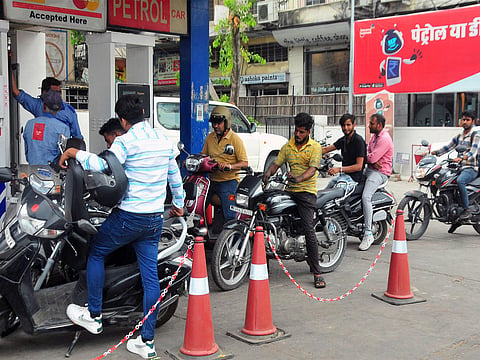

After growing public concern lent credibility to complaints from a large section of car buyers, the Society of Indian Automobile Manufacturers (SIAM) withdrew a letter sent to the Ministry of Petroleum and Natural Gas.
The letter had raised concerns that contamination in E20 fuel was causing vehicle-related issues, with SIAM citing the need for further authentication of the findings.
In a statement issued on Tuesday night, SIAM said the communication in question was part of routine and ongoing technical deliberations between various stakeholders, including industry bodies, oil marketing companies, auto OEMs (Original Equipment Manufacturers), and testing agencies. It stated that some of the figures mentioned in the letter require further verification.
The clarification came after a SIAM letter, written on July 28 to Petroleum Secretary Neeraj Mittal, became public. In the letter, the industry body said its members were witnessing a sharp increase in failures of vehicle components such as fuel injectors, fuel pumps, exhaust gas recirculation (EGR) valves, and other parts that come into direct contact with fuel or engine emissions.
The letter stated that investigations into the failed parts pointed to corrosion and wear caused by high chloride contamination in the E20 fuel being used. According to the letter, fuel samples collected from vehicles showed chloride levels of up to 500 parts per million (ppm), while samples collected from retail outlets showed contamination levels of up to 350 ppm.
SIAM said the increase in chloride-related issues had been observed specifically after the implementation of E20 fuel. Chloride accumulation in fuel or exhaust systems can cause corrosion and permanent damage to engine parts, either immediately or over time, depending on contamination levels.
The industry body added that automakers have been raising the issue of chloride contamination at the BIS committee for more than two years, but a decision to include chloride as a mandatory fuel quality parameter remains pending. SIAM sought the government's intervention on the matter.
It also flagged excessive moisture in E20 petrol, stating that high moisture levels can cause phase separation of the fuel and immobilise a vehicle immediately after refuelling. While the permitted moisture level is 3,000 mg/kg, SIAM said levels exceeding 10,000 mg/kg, or 1%, have been observed in many cases.
Responding to the reports, the Ministry of Petroleum and Natural Gas (MoPNG) said oil marketing companies (OMCs) regularly monitor fuel quality and have further strengthened testing protocols across the country.
"Certain media reports have cited issues of fuel adulteration or contamination. It is hereby clarified that fuel quality is monitored on a regular basis by Oil Marketing Companies. In addition to the advanced and elaborate testing protocols already in place, further checks have been instituted, including water ingress testing 8–12 times a day at over 87,000 outlets," the ministry said in a statement.
In its statement, SIAM said, "MoPNG has also instituted 3 ppm guidelines for chloride/sulphur as a precautionary measure for all ethanol being blended into the petrol supply chain. All of these steps fully meet the needs of the automobile industry."
It further said, "We understand from OMCs that additional checks have been instituted, including water ingress testing about 8–12 times a day at over 87,000 outlets and after every instance of rainfall near petrol pumps."
