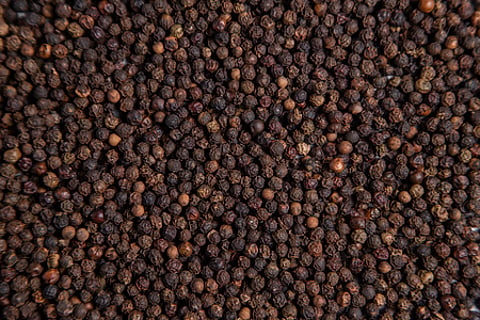

The National Commodity and Derivatives Exchange (NCDEX) on Tuesday announced the relaunch of Black Pepper Futures after a gap of 14 years, with trading set to begin on July 15 and Kochi designated as the delivery and pricing centre.
The move is aimed at establishing an Indian benchmark for black pepper prices instead of relying on Vietnam, which currently dominates global price discovery. The compulsory delivery contract will have a trading unit of one metric tonne, with an approximate contract value of Rs 7 lakh. Contracts will be available for 11 months of the year, excluding February.
Reflecting the sharp rise in pepper prices over the years, the exchange will quote prices in rupees per kilogram instead of the earlier quintal-based format. NCDEX has also proposed quality specifications that are stricter than prevailing FSSAI norms, including a 0.25% cap on mouldy berries and mandatory testing for insect fragments, mineral oil, and other harmful contaminants before stocks become eligible for delivery through exchange-approved warehouses.
According to NCDEX, global pepper production stands at 5.36 lakh metric tonnes, while India's output has declined to 55,000-60,000 metric tonnes against an annual domestic demand of 80,000-85,000 metric tonnes, necessitating imports. Karnataka accounts for 69.2% of India's pepper production, followed by Kerala at 23.9%, though Kochi remains the country's principal trading and processing hub.
The announcement was made alongside the launch of NCDEX's 'Har Ghar Investor' campaign in Kochi. The investor awareness initiative seeks to expand regulated investment access in rural and semi-urban India through farmer-producer organisations (FPOs) and regional rural banks.
NCDEX is steadily evolving into a diversified, multi-asset market infrastructure institution. With SEBI’s in-principle approval to enter the equity and equity derivatives segments and following a successful fund raise of Rs 770 crore, the exchange is preparing to launch its first offering in the cash segment through a mutual fund platform.
NCDEX Managing Director and CEO Arun Raste said only 14% of Indians currently invest in equities and mutual funds, compared with around 70% in China. The exchange currently works with 750 FPOs representing nearly 12.7 lakh farmers, with 20 FPOs already qualifying as mutual fund distributors after clearing the NISM certification examination.
