
As tensions in West Asia escalate following attacks involving Iran and the United States, raising concerns over possible disruptions to shipping through the Strait of Hormuz, the Ministry of Petroleum and Natural Gas has said India is better prepared this time and is not worried about the country's LPG supplies.
According to ministry officials, India has significantly strengthened its energy security by diversifying both its LPG import sources and shipping routes, putting the country in a stronger position to withstand any supply disruptions arising from the ongoing crisis.
"This time, we are well prepared for the crisis. Our crude oil and gas supplies remain normal. The reason is that we have diversified not only our purchasing sources but also our shipping routes," a senior ministry official said. During the previous West Asia crisis, which began on February 28 and lasted for more than 100 days, shipping through the Strait of Hormuz was severely disrupted.
The strategic waterway is responsible for transporting nearly 20% of the world's crude oil and liquefied natural gas (LNG) supplies. For India, the Strait of Hormuz remains a critical energy corridor, handling nearly 40% of the country's crude oil imports, around 60% of its LNG imports and about 90% of its LPG imports.
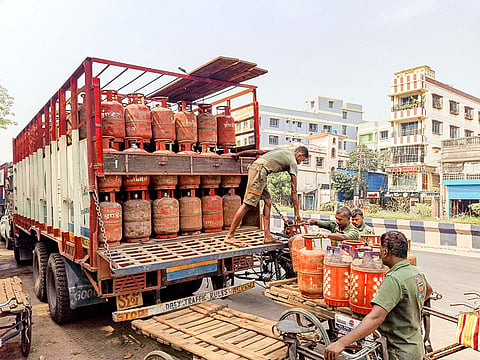
LPG was the worst-hit fuel during the earlier disruption, as India imports nearly 60% of its domestic LPG requirement from Qatar, Saudi Arabia, the UAE and Kuwait through the Strait of Hormuz. To reduce vulnerability, the government increased domestic LPG production by nearly 70%, from around 32,000 metric tonnes per day to about 54,000 metric tonnes per day in peak of crisis.
India also diversified its sourcing by securing additional LPG cargoes from the United States, Canada and Algeria. The official said the rerouting of energy supplies has not been limited to India. Several global suppliers have also altered their shipping patterns to avoid conflict-prone waters. Some exporters have increasingly used the UAE's Port of Fujairah, located on the country's east coast outside the Persian Gulf, as an alternative export hub to bypass the Strait of Hormuz to export its petroleum products.
"With the continuing conflict in the region, several oil suppliers have rerouted their shipments. Many countries are using the UAE as an alternative route to transport crude oil and gas," the official said. Meanwhile, renewed geopolitical tensions in West Asia have driven international crude oil prices higher. At the time of writing, Brent crude futures were trading at $85.30 per barrel.
