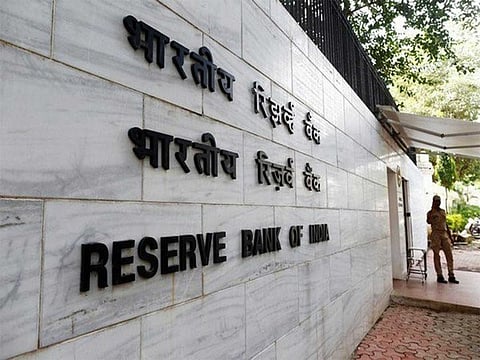

The government has approved a proposal of the Reserve Bank of India (RBI) to introduce one billion pieces each of Rs10 and Rs20 polymer banknotes for field trials and for regular issuance of polymer banknotes in these two denominations after successful completion of field trials, the Ministry of Finance confirmed on Monday.
In a written reply to the Parliament on Monday, Pankaj Chaudhary, Minister Of State For Finance, said, “The proposal has been approved by the government. The RBI had informed that as per international studies, the life span of polymer banknotes is significantly higher than that of paper banknotes. The introduction of polymer banknotes is currently in a preliminary phase and the impact on digital payments, if any, could be ascertained only after regular issuance of these notes.”
The central bank aims to have both paper notes and polymer notes parallel and there are no plans to remove the paper note from the market.
A couple of weeks ago, a tender was floated by a subsidiary of the Reserve Bank of India (RBI) that revealed the intention to initiate a trial of plastic
notes. This is not the first time the central bank aimed to have polymer notes. Back in 2012, a a similar field trial was announced, however, the plan was never implemented therafter. The Bharatiya Reserve Bank Note Mudran Pvt Ltd’s (BRBNMPL) tender invited bids for 3.4 crore polymer sheets that are to be used to print currency notes. The polymer sheets to be used for the currency notes are not merely plastic sheets, rather they would have some special security features, suggest media reports. However, the tender mentioned that 3.4 crore sheets were an “immediate requirement”.
The RBI floated a global Expression of Interest (EOI) a couple of weeks ago calling the global players for the manufacture and supply of polymer substrate sheets, the specialised material used to print polymer banknotes. The last date for submitting bids is August 18.
Polymer banknotes are considered significantly more durable than conventional paper currency, and thus they are expected to last longer in circulation. The polymer makes themmore resistant to moisture, dirt and wear and tear. Several countries, including Australia, Canada, the United Kingdom and New Zealand, have polymer currency .
