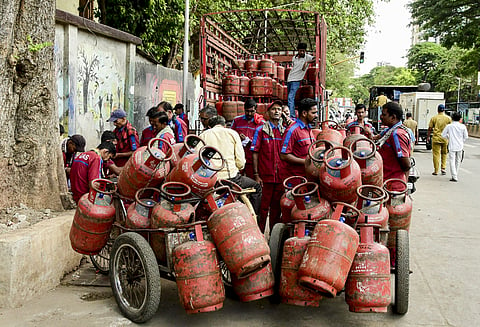

India significantly increased its LPG imports from the US during the West Asia crisis, with American supplies accounting for as much as 50% of the country's total LPG imports as it sought to offset disruptions from its traditional suppliers in the Gulf, according to official sources.
India has a term contract to import 2.2 million metric tonnes per annum (MTPA) of LPG from the US for the 2026 contract year, which accounts for around 10% of the country's annual LPG import requirement. However, during the crisis, state-run oil companies sharply increased spot purchases from the US to meet domestic demand, taking the American share of total LPG imports to nearly half.
LPG cargoes from the US take around 35-40 days to reach India. The term contract requires about 38-40 Very Large Gas Carrier (VLGC) cargo discharges annually, with around half of those cargoes originating from the US.
An official said India's strategy of diversifying crude oil and LPG sourcing has helped shield the country from disruptions caused by tensions in the Strait of Hormuz and the ongoing security situation in the Red Sea.
"With the diversification of our purchase of oil and gas, there is no impact on India's supply of crude or gas right now. Currently, the US is the largest supplier of LPG to the country," the official said.
During the West Asia crisis, cargo movement through the Strait of Hormuz—a critical global energy chokepoint—was severely impacted. The strait handles nearly 40% of India's crude oil imports, 60% of its LNG imports and about 90% of its LPG imports.
LPG was the worst-hit fuel as India imports nearly 60% of its domestic LPG requirement, with around 90% of those imports traditionally sourced from Qatar, Saudi Arabia, the UAE and Kuwait through the Strait of Hormuz.
The supply disruption also affected domestic consumption. India's LPG consumption fell to around 14.7 million tonnes during January-June 2026, down about 8% from a year earlier, while imports declined about 28% to nearly 7.5 million tonnes over the same period.
To maintain supplies, the government implemented a series of measures, including prioritising domestic LPG consumption, diversifying import sources, adopting dynamic inventory management and reallocating supplies across regions to address localised shortages.
