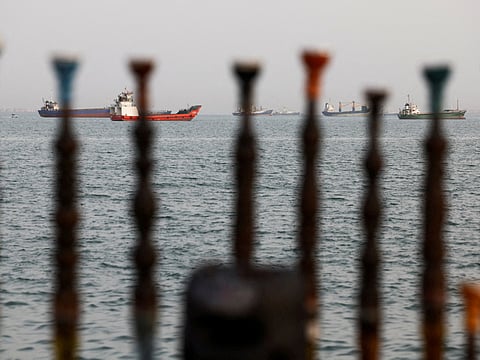

MUMBAI: The reopening of the Strait of Hormuz can materially ease the profitability pressure on India Inc for the rest of this fiscal versus what was envisaged earlier, halving the hit on margins to 100 bps now, if the tenuous peace deal is endured, according to a report released by credit rating agency Crisil on Thursday.
Energy markets have responded swiftly to the respite with crude prices softening and erasing the war gains and falling to $70 a barrel level today. However, the availability of crucial inputs such as gas and urea is expected to improve only gradually as structural supply-side disruptions that occurred during the war are sorted. At present, ships transiting the Strait number well below the pre-conflict levels, Crisil Ratings said in a report Thursday.
“If the truce holds and there are no further disruptions, our assessment of 34 sectors exposed to the conflict indicates the impact on operating margins will be contained at around100 bps to 11% this fiscal from 12% expected prior to the conflict. Earlier, assuming a prolonged conflict and closure of the Strait, we had pencilled in an impact of 200 bps,” the agency said.
According to Subodh Rai, Crisil Ratings managing director, “the recent sharp correction in crude prices and likely normalisation of gas supplies are beneficial for India Inc as that would ease cost pressures meaningfully. If the armistice sustains, two-thirds of the 34 sectors will see minimal disruption, with margin recovery in the second half mostly offsetting pressures of the first half. But the risk of conflict escalation persists, so we foresee corporate India staying cautious and continuing to focus on supply-chain diversification.”
Further, demand conditions remain underpinned by government-led infra spending and expectations of steady consumption. Moreover, the calibrated price hikes undertaken to offset rising input costs should support realisations, he added.
“Our analysis of 34 sectors, representing 65% of rated corporate debt, assumes crude supplies will normalise swiftly and the price of Brent will average $80-85 a barrel this fiscal. Gas supplies would lag a bit with overall disruption assumed at four months for this fiscal. The reopening of the Strait is also expected to gradually reduce India’s dependence on high-cost spot gas,” he said.
The impact on both revenue and margins will be minimal for 24 sectors, with recovery largely backloaded to the second half. The remaining 10 sectors face a meaningful squeeze with operating margins declining by one-tenth to one-third, compared with the pre-conflict estimates, Rai said.
For four of these 10 sectors, the credit quality outlook is stable/neutral as the balance sheet strength would cushion the impact of lower profitability. Whereas for the rest six sectors, the credit quality outlook is moderately negative because of one-tenth or more impact on profitability, higher working capital requirement and moderate balance-sheet strength, he added.
For airlines, which are among the worst hit, the first-half margin compression is unlikely to fully reverse given currency pressures, capacity rationalisation and constrained pricing power, which would strain profitability, while for another equally badly hit ceramics, elevated fuel costs, limited gas availability and the consequent decline in capacity utilisation will compress margins in the first quarter, with only a partial and gradual recovery as supply conditions, pricing and utilisation expected to improve over the rest of this fiscal
For the commodity-linked sectors like flexible packaging, specialty chemicals, polyester textiles, higher input costs and moderate ability to fully them pass on will weigh on margins and for the diamond polishing sector persistent demand disruptions will weigh on both volume and profitability, delaying recovery
Importantly, no sector is expected to witness high impact on either revenue or profitability at this juncture, the report said.
Meanwhile the report said the emergency credit line guarantee scheme for small businesses has seen over Rs 48,000 crore of guarantees being as of June 9.
Among the 24 sectors expected to see minimal impact, oil marketing companies and fertiliser manufacturers stand out for a sharp turnround in profitability. Between March and May, net under-recoveries (after inventory gains) for OMCs are estimated at Rs 40,000–45,000 crore. Even if excise duties were reverted to pre-conflict levels and retail fuel prices remain unchanged, OMCs are likely to report operating profits for this fiscal, offsetting earlier losses, the report said.
