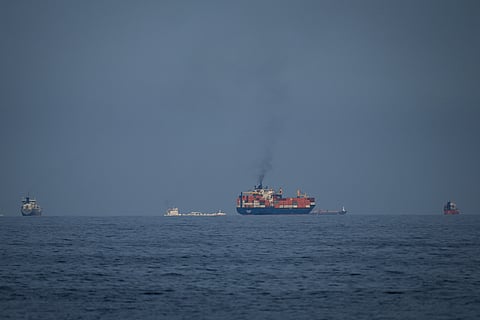

As the Iran-Israel conflict continues for more than 10 days, the logistics industry is bracing for a sharp rise in shipping and transshipment costs, with additional charges likely to increase by up to $1,000 per twenty-foot equivalent unit (TEU) if consignments are rerouted through the Cape of Good Hope.
Industry executives said the evolving security risks in key maritime corridors are forcing shipping lines to avoid traditional routes through the Suez Canal and the Strait of Hormuz, which handle a significant portion of global container traffic.
“The current situation is very fluid. Most shipping liners are now reluctant to take the Suez Canal route. Around 50-60% of transshipment normally happens through the Suez Canal. If shipments are rerouted via the Cape of Good Hope, reforwarding and retrieving charges could rise by around $1,000 per TEU, though the exact figure will depend on the destination,” said J Krishnan of S. Natesa Iyer Logistics LLP.
He added that if diversions continue, more than 60% of transshipment activity could shift through the Cape of Good Hope route, significantly increasing transit time and operational costs.
According to Mumbai-based logistics firm Kenshine Group, exporters are already facing high reforwarding charges in West Asia. The cost of moving containers by road from Khor Fakkan in Sharjah to Jebel Ali in Dubai currently ranges between $3,000 and $3,500 per container, including demurrage.
Jebel Ali, the largest port in West Asia with a container handling capacity of nearly 16 million TEUs, has become a key fallback hub for diverted shipments. Exporters would have avoided such reforwarding expenses if shipping through the Strait of Hormuz had remained risk-free, industry players said.
“If vessels are forced to reroute around the Cape of Good Hope instead of using traditional Gulf or Suez-linked corridors, exporters could see logistics costs rise by roughly 25-40% depending on the routing and cargo profile,” said Krishnakumar Nair, Founder and CMD of Kenshine Group.
According to Hemal Thakkar, Director at Crisil Intelligence, freight rates had already been elevated due to tensions in the Red Sea even before the latest escalation.
“Container freight rates for the Asia–West Asia route have surged from $1,200–$1,800 per FEU to $3,500–$4,500 per FEU, while bunker fuel prices have jumped 30–35%. Shipping lines have also imposed additional charges such as Emergency Conflict Surcharge and War Risk Surcharge, further increasing logistics costs for exporters,” he said.
Industry estimates suggest that 40,000–45,000 Indian export containers worth $1–1.5 billion have been affected by the disruption. Of these, around 80% — roughly 32,000–36,000 containers — are already at sea, awaiting routing decisions or facing delays.
Nearly 1,800 containers from Chennai have reportedly been rerouted, while about 4,000 Gulf-bound export containers from India have been redirected due to the disruptions.
