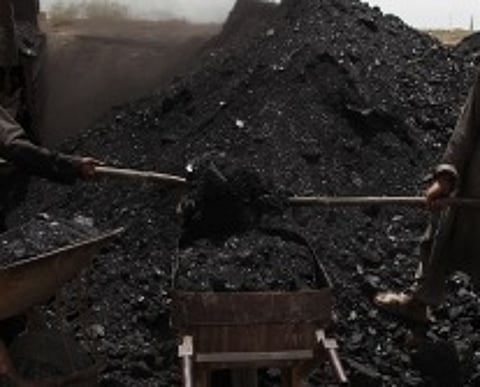

In a bid to cut down dependence on Liquefied Natural Gas (LNG) and fertiliser imports, the government on Wednesday has approved a coal gasification scheme with a financial outlay of Rs. 37,500 crore. The incentive will be provided for the production of syngas and its downstream products, targeting the gasification of nearly 75 million tonne of coal/lignite.
India holds one of the world’s largest coal reserves (around 401 billion tonne) and lignite reserves (around 47 billion tonne). Coal accounts for over 55% of the country’s energy mix. Gasification converts coal/lignite into ‘synthesis gas’ (syngas), a versatile feedstock for producing fuels and chemicals domestically, enabling India to substitute high-value imports and insulate itself from global supply disruptions and price volatility.
According to the government scheme, the financial incentive will be provided at a maximum of 20% of the cost of plant and machinery. The financial incentive for any single project will be capped at Rs. 5,000 crore; for any single product (except Synthetic Natural Gas and Urea), it will be capped at Rs. 9,000 crore; and for any single entity group, it will be capped at Rs. 12,000 crore across all projects.
The scheme is projected to create around 50,000 direct and indirect jobs across 25 projects in coal-bearing regions. Coal/lignite utilisation is expected to generate around Rs. 6,300 crore annually from the envisaged gasification of 75 million tonnes, in addition to downstream revenue from GST and other levies.
India's import bill for key substitutable products such as LNG, urea, ammonium nitrate, ammonia, coking coal, methanol and DME stood at approximately Rs. 2.77 lakh crore in FY2025, a vulnerability further exposed by the ongoing geopolitical situation in West Asia.
Building on the National Coal Gasification Mission (2021) and a Rs. 8,500 crore scheme approved in January 2024 — under which eight projects worth Rs. 6,233 crore are under implementation — the new scheme seeks to accelerate momentum with significantly enhanced support.
Meanwhile, industry bodies welcomed the move. Balasaheb Darade, Founder & Managing Director of New Era Cleantech, said that India is sitting on one of the world’s largest coal reserves. The question is no longer whether we use coal — the question is whether we use it intelligently to build national strength, energy independence and industrial resilience.
Atanu Mukherjee, CEO, Dastur Energy, is of the view that the success of this programme will depend on execution discipline. The right gasification technology must be matched to the right coal. Indian coal is high-ash and has very different characteristics from coal used in many global gasification systems. Therefore, technology selection, coal chemistry, project scale, downstream integration, financing structure and carbon management will determine whether these projects become commercially bankable.
