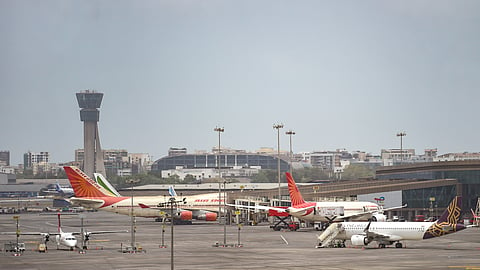

MUMBAI: Around 91 per cent of international passenger traffic at Mumbai's Chhatrapati Shivaji Maharaj International Airport (CSMIA) will be unaffected while its ageing Terminal 1 is redeveloped, with 39 of the 50 international airlines continuing to operate from the airport under the Summer 2027 schedule, sources said.
The carriers staying include Emirates, Etihad Airways, Singapore Airlines, SriLankan Airlines, Thai Airways, British Airways, Lufthansa, Air France and Turkish Airlines. All will operate from Terminal 2 of CSMIA.
Of the roughly 55 million passengers that CSMIA handles each year, about 5 million, or 9 per cent, are expected to move to Navi Mumbai International Airport (NMIA) during the redevelopment, according to people with direct knowledge of the matter.
The remaining 50 million or so will continue to be served at CSMIA in the coming summer schedule, they said.
After consultations with international airlines, 11 carriers operating around 16 daily departures to certain destinations may move those services to NMIA from the end of March 2027.
Domestic carriers IndiGo, Air India and Akasa Air have already announced plans to shift flights on certain routes to NMIA.
The temporary redistribution, the people said, will create the operational headroom needed for construction while keeping disruption at CSMIA to a minimum. CSMIA has assured airlines that their historical slot allocations will be protected during the transition.
The redevelopment is being undertaken mainly to address structural and safety concerns at Terminal 1, which was commissioned in 1964. Structural audits by Structwel in 2017 and by IIT Bombay in 2024 flagged concerns with the existing infrastructure, the people said. The audits underscored the need to replace the six-decade-old facility with a modern, safer and future-ready terminal, they said.
The new Terminal 1 will raise passenger-handling capacity from 15 million passengers per annum (MPPA) to 20 MPPA. It will also significantly upgrade passenger processing, security screening and other infrastructure. The airport targets March 2029 for the redeveloped terminal to become operational.
Presently, 38 carriers operate about 333 flights a week in total from Mumbai. The Gulf carriers dominate with Emirates operating 35, Etihad 28 and Flydubai 5. British Airways has 21.
Air France, Ethiopian Airlines, Singapore Airlines, Thai Airways, SriLankan Airlines and Virgin Atlantic Airways each operate 14 flights. Cathay Pacific Airways, Kenya Airways and Malaysia Airlines have 10 each.
Lufthansa, Swiss Air, KLM Royal Dutch Airlines, Turkish Airlines, All Nippon Airways, China Southern Airlines, Azerbaijan Airlines, Batik Air, Philippine Airlines, Thai Lion Air, Air Tanzania and Thai VietJet have seven each.
Others are Scandinavian Airlines, EgyptAir and Yemenia Airways (five each); Air Mauritius, China Eastern Airlines, Royal Jordanian and Vietnam Airlines (four each); Air Astana, Uganda Airlines and VietJet (three each); and Fly Beond, Iraqi Airways and Mahan Air (two each).
The plan shields most international travellers from disruption. The 39 carriers staying account for 78 per cent of foreign airlines at CSMIA and handle nearly all of its traffic.
The airlines moving are smaller in passenger terms, the people said. Because the large Gulf and European long-haul operators remain at Terminal 2, the main impact will fall on the 11 airlines relocating some routes and on passengers on those services.
Slot protection is meant to reassure airlines that moving routes to NMIA will not cost them their positions at CSMIA.
The plan also ties CSMIA's rebuild to the ramp-up of NMIA.
CSMIA has assured airlines that their historical slot allocations will remain protected during the temporary transition.
The redevelopment comes as Mumbai's aviation infrastructure prepares for the addition of NMIA, which is expected to take on part of the traffic currently handled by the capacity-constrained CSMIA.
The proposed shift of select services will allow CSMIA to undertake major infrastructure work without relocating the bulk of its international operations. Keeping 39 international airlines at Terminal 2 is also expected to limit the impact on passengers and airline connectivity.
At the same time, the move will provide NMIA an opportunity to absorb additional airline operations as Mumbai's second airport becomes part of the metropolitan aviation network.
The redevelopment will add five million passengers a year in handling capacity at Terminal 1.
