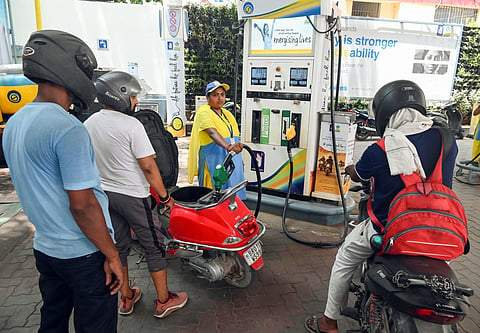

India's wholesale price inflation rose to 12.29 per cent in October, the highest level in the revised Wholesale Price Index (WPI) series with 2022-23 as the base year, driven by a sharp rise in fuel and power prices and higher costs of non-food items.
The wholesale inflation rate stood at 11.39 per cent in September 2026. Economists, however, expect a moderation in November as global energy prices have eased from their October highs.
Inflation in the fuel and power category surged to 32.84 per cent in October from 25.85 per cent in the previous month. Non-food articles inflation also rose to 11.69 per cent from 10.28 per cent, while food articles inflation edged up to 8.26 per cent from 8.14 per cent.
Inflation in minerals increased to 12.64 per cent from 9.51 per cent, taking the overall primary articles inflation to 9.24 per cent, compared with 8.67 per cent in September.
Manufactured products, however, recorded a marginal moderation in inflation to 9.54 per cent from 9.76 per cent.
According to the Commerce and Industry Ministry, the increase in wholesale prices was driven by mineral oils, crude petroleum and natural gas, electricity, food and non-food articles, basic metals, chemicals, food products, textiles and rubber and plastic products.
India Ratings and Research Chief Economist Devendra Pant attributed the October surge to the base effect and a broad-based increase in prices across primary articles and fuel and power.
He said the prolonged West Asia crisis continued to push up fuel and power inflation, which was likely to remain elevated until the conflict was resolved. However, sustained weakness in crude oil prices and appreciation of the rupee could bring down WPI inflation to around 11.5 per cent in November.
Barclays, in a note, said wholesale inflation had remained in double digits since August, but the pass-through to retail prices, particularly for core items, had been moderate. The easing of global energy prices in November could also help moderate wholesale price pressures in the coming months.
Brickwork Ratings Economist Pranjal Ghate said the decline in Brent crude prices by around USD 20 per barrel by mid-November could provide some relief if sustained, easing wholesale inflation and, with a lag, retail prices through lower input and transportation costs.
Brickwork expects retail inflation to peak at around 6 per cent in the third quarter of FY27 before moderating, although it may remain above the Reserve Bank of India's 4 per cent target through the year.
Ghate also said the October WPI data reinforced expectations of a further 25-basis-point repo rate hike to 5.75 per cent, followed by a pause.
The assessment comes after retail inflation rose to 6.09 per cent in October, breaching the RBI's upper tolerance limit for the first time in two years. The data has fuelled expectations of a rate hike at the central bank's December 2-4 monetary policy review.
Wholesale inflation has been rising since the beginning of the current financial year, with the West Asia conflict and the resulting disruption to shipping through the Strait of Hormuz pushing up global crude oil and fertiliser prices, with spillover effects on food and other commodities.
Resurgent India Managing Director Jyoti Prakash Gadia said effective supply-side management and a prudent monetary policy focused on price stability would be crucial to sustaining economic growth.
The government introduced the revised WPI series, with 2022-23 as the base year, on June 15.
