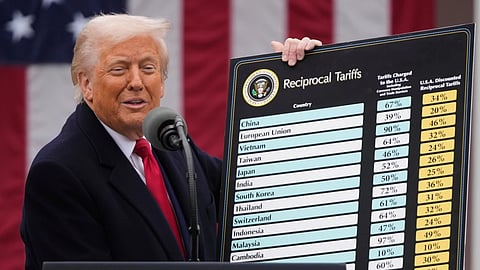

NEW DELHI: With the US government proposing a fresh 25% tariff on Indian exports in sectors such as steel, textiles, jewellery, pharmaceuticals, and other labour-intensive industries under a Section 301 investigation, exporters are eyeing new markets and seeking to reduce their dependence on the US to cushion the impact of the proposed duties.
Some exporters and economists have flagged that the US is using the move as a pressure tactic at a time when both countries are engaged in negotiations for a Bilateral Trade Agreement (BTA).
On Wednesday, the US said it would lower tariffs on India to 17% if a trade deal is reached, but warned that the duties could be raised if the talks fail. The proposed duties under Section 301 of the US Trade Act of 1974 could affect sectors differently.
The USTR has identified excess capacity in seven Indian manufacturing sectors, including solar modules, steel, textiles, health-related goods, petrochemicals, construction materials and automobiles.
Exporters say broader uncertainty over market access could disrupt investment and order flows. The gems and jewellery industry is among the most vulnerable sectors due to its substantial dependence on the US, one of India’s largest markets for diamonds, jewellery and precious-stone products.
According to data compiled by the Gem and Jewellery Export Promotion Council (GJEPC), India’s gem and jewellery exports to the US grew 14.87% to $3,607 million during April-October 2026 year-on-year, despite uncertainty surrounding earlier American tariff steps. However, exporters fear another increase in duties could reverse gains.
“Any increase in tariffs, or continued uncertainty over market access, would affect the competitiveness of Indian exports, disrupt order flows and compress exporters’ margins in this key market. The industry is hopeful the agreement will provide relief by reducing the tariff to 17%,” said Kirit Bhansali, GJEPC chairman.
US playing pressure tactic: exporters
Some exporters and economists have flagged the US is using the move as a pressure tactic at a time when both countries are engaged in talks for a BTA
