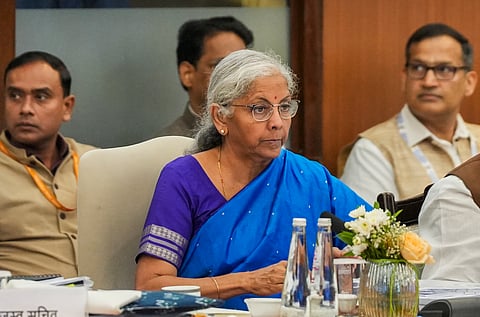

NEW DELHI: The GST Council on Thursday approved a series of process reforms aimed at easing compliance for businesses, including simplifying registration and refunds, curbing arrest powers under GST laws and raising the monetary threshold for prosecution of offenders to Rs 10 crore from Rs 5 crore.
The Council also approved a Rs 10,000 threshold for issuing GST show-cause notices and allowed input tax credit (ITC) on employee insurance expenses. It reduced GST on delivery services provided by unregistered delivery riders through e-commerce platforms to 5%. However, a proposal to allow businesses to claim ITC even when their suppliers have collected tax but failed to deposit it with the government was referred to a committee for further examination.
The proposal to allow ITC on motor vehicles was deferred to the next meeting.All process-related reforms, including those concerning registration and refunds, have been approved, officials said, adding that the measures would significantly benefit businesses.
The Council also discussed demands by mineral-rich states for changes in the GST framework governing coal and other minerals. Jharkhand opposed the proposed decriminalisation and sought a fairer distribution of the fiscal and environmental costs of mining.Jharkhand, which accounts for around 23.27% of India's coal reserves, said mineral-producing states bear the long-term costs of land and forest diversion, displacement and environmental damage, while much of the economic value generated by mining accrues to consuming states.The state proposed keeping coal outside GST and allowing states to levy VAT on it.
It also sought an alternative support mechanism to offset revenue losses arising from GST rate rationalisation, changes in the funding pattern of the VB-G RAM G scheme, amendments to the Mines and Minerals (Development and Regulation) Act, and the abolition of the GST compensation cess.Jharkhand estimated that the abolition of the compensation cess had created an annual revenue gap of Rs 22,500 crore.
It also sought the settlement of earlier dues of around Rs 1.36 lakh crore and proposed a Resource-Origin and Ecological Equalisation Framework to compensate mineral-producing states for environmental damage and other long-term costs.
