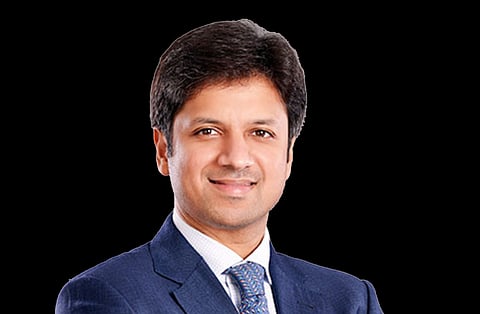

At a time when India is signing and implementing several free trade agreements (FTAs) with advanced and large economies, the onus lies on the Indian industry to enhance their quality standards to remain competitive, tells Anant Goenka, vice-chairman, RPG Group, and the current FICCI President. In an interview with TNIE’s Pushpita Dey, Goenka tells Indian exporters’ approach should not be to complain about competition from China, rather offer customised and quality items to the countries. Edited excerpts:
With FTA utilisation remaining low, what must Indian industry do to turn tariff concessions into sustained export growth?
I think the FTAs are a great way of redrawing relations with many different countries. It is a great opportunity for Indian businesses as we have huge competitive advantages with respect to cost, people and to that extent the opportunities particularly with large, developed economies like the European Union, the UK and the EFTA. It will take some time. For example, if a tariff barrier has been reduced, it is often not easy to immediately start doing business in the short term. Indian industry has to brace for improving quality, aligning with the standards of those specific countries, regulations of those countries and then setting up the necessary distribution structure that is needed, the necessary quality standards – all of that has to be put in place. So, it will happen, but it will not happen immediately.
Are India’s FTAs truly reciprocal, or have negotiators prioritised tariff access over regulatory access, as the widening trade deficit with the UAE suggests?
There has been substantial export growth, particularly to the UAE, with a CAGR of about 14% a year following the India-UAE FTA. Similarly, FTAs create significant opportunities and some FTAs also involve commitments towards large investments in India. At FICCI, we are working extensively to communicate these opportunities to our members. We have more than 2,000 direct members and 250,000 indirect members.
Our effort is to share information on the opportunities available under FTAs, identify industries where the gains can be realised relatively quickly, and help businesses take advantage of them. Even setting up a joint venture requires several visits, with companies travelling to India and exploring potential partnerships, including technology-sharing arrangements. Such a process can take at least six months. Therefore, once an FTA is signed, these processes take time to translate into actual outcomes.
Do we tend to focus more on tariff issues and fail to address other non-tariff barriers?
The new wave of trade agreements signed over the last one-and-a-half years is far more comprehensive than those in the past. For instance, the India-UK agreement covers a wide range of areas, with several chapters addressing aspects such as intellectual property, movement of human capital, trade and tariffs, as well as provisions to revisit agreements if certain commitments are not met. Every aspect has been examined, making these agreements much more comprehensive than those focused primarily on tariffs.
The bigger question now is regulation and the non-tariff barriers that Indian companies face in different markets. As Indian industry, we need to recognise that we have to adapt to the requirements of these markets, many of which are linked to environmental and quality standards. We cannot keep citing non-tariff barriers as a reason for not being able to access these markets. Instead, we need to improve our quality and environmental standards and find ways to remain cost-competitive while meeting these requirements-- we can do so.
At this stage, the onus is on industry. The government has done a significant part of its job by negotiating these agreements, and it is now up to industry to adjust, adapt and make the most of the opportunities they offer. That said, if there are genuine concerns regarding non-tariff barriers, the industry and the government are in close touch with the European Union and other key markets to raise these issues and address them.
You once said that India is high on ambition, lacks the execution architecture. What are the main challenges you think should be addressed immediately?
I think the Indian industry is lacking in its global ambition. Today, India may have 2,000 or even 3,000 brands, but how many of them are well known around the world? To a certain extent, our IT services have done well, but we have too few product brands with truly global recognition. There is a lot more that can be done, and it starts with ambition. India has a large domestic market, which provides a certain degree of comfort. However, let me give you the example of our own company, CEAT Tyres. Fifteen years ago, we primarily sold in India and exported whatever surplus tyres we had. Exports were essentially an additional source of sales. That approach changed when we decided to target markets such as Europe and the US. We realised that we needed to understand the specific requirements of customers in these markets. When we spoke to distributors, they made it clear that we could not simply sell our India-focused products there because customer needs were different. Europe required a much wider range, including ultra-high-performance tyres, winter tyres and tyres for vans, while the US market needed more heavy-duty tyres.
This meant developing an entirely new product range, which itself could take one to two years. Product development involves risks, failures and repeated testing, along with considerable costs and investments in technology. It requires time, effort and capital. Beyond product development, companies also need to establish local distribution networks and invest in advertising and marketing. You cannot rely on cricket advertising in Europe because cricket does not have the same following there. We therefore had to look at football sponsorships. Entering a global market requires a comprehensive strategy and a clear ambition to build a presence there.
Companies must innovate for individual markets, meet high quality standards and comply with local regulations. Simply exporting products from India is not enough. Building a globally recognised brand requires sustained ambition, innovation, investment and a willingness to understand and meet the expectations of customers worldwide.
Can Indian tyre companies and other exporters compete globally with price-competitive Chinese manufacturers without policy support?
This is not a problem specific to Indian manufacturing; it is a global manufacturing challenge. If Chinese companies are competing unfairly in India, anti-dumping duties can be imposed when there is evidence of injury to domestic industry due to an uneven playing field. This is part of the legal framework, and similar measures are available in other countries as well. Without appropriate rules and regulations, it can be difficult to compete, given the various advantages that some manufacturers enjoy. At the same time, we must recognise the scale at which Chinese manufacturers operate, which gives them a distinct competitive advantage.
However, when we enter markets such as Europe and the US, our approach should not be to complain about competition from China. Instead, we need to raise our quality standards and recognise that there is a market for products that meet the requirements of these customers.
