
India’s crude oil imports from Russia surged in June, while shipments from the United Arab Emirates (UAE) remained near record levels as refiners sought to secure supplies ahead of the full restoration of Gulf flows after the reopening of the Strait of Hormuz, news agency PTI reported.
India imported an average of 2.66 million barrels per day (bpd) of crude oil from Russia in June up to June 19, compared with 1.91 million bpd in May, according to data from maritime and commodity intelligence firm Kpler cited in the PTI report. The rise cemented Moscow’s position as India’s largest oil supplier.
Imports from the UAE stood at 6,36,000 bpd in June up to June 19, slightly below the record 6,44,000 bpd imported in May. Venezuela emerged as India’s fourth-largest crude supplier with shipments of 2,09,000 bpd, behind Saudi Arabia’s 3,84,000 bpd, reported PTI.
Imports from the United States fell sharply to 91,000 bpd from 2,52,000 bpd in May, according to Kpler data.
The purchases highlight India’s strategy of diversifying crude sourcing, with Russian barrels remaining attractive due to discounts, while UAE supplies helped offset uncertainty around shipments through the Strait of Hormuz.
India, the world’s third-largest energy importer, depends heavily on the Gulf region for crude oil, liquefied natural gas (LNG) and liquefied petroleum gas (LPG). Supplies were disrupted after Iran closed the Strait of Hormuz following US and Israeli attacks, affecting a key energy route that carries about 20 per cent of global oil consumption and serves as the main export channel for Gulf producers, including Saudi Arabia, Iraq, Kuwait, the UAE and Qatar.
Oil shipments through the Strait of Hormuz began recovering late last week after the US and Iran agreed to a ceasefire. However, the truce remains fragile, with Iranian authorities accusing Israel of violating the agreement, raising concerns over the durability of the reopening.
According to Sumit Ritolia, Senior Manager - Modelling at Kpler, the reopening of Hormuz is expected to provide the quickest relief to India’s LPG supplies, while crude oil and LNG imports are likely to normalise more gradually as the country has already adjusted to months of disruption through diversification and alternative supply routes, PTI reported.
The impact of the disruption varied across fuels, with LPG emerging as the most affected commodity, while crude and LNG imports remained relatively resilient due to alternative sourcing and bypass infrastructure.
Ritolia said, "A reopening of the Strait of Hormuz (SoH) would represent a major milestone for global energy markets, but the impact on India is likely to vary significantly across commodities."
"While India remains one of the largest importers of Middle Eastern hydrocarbons (crude, LPG, and LNG), crude and LNG imports have proven relatively resilient throughout the disruption, unlike LPG, which has been the most severely affected," he added.
He said the recovery would likely be sequential, with LPG flows normalising first, followed by LNG and crude.
"Under our base case of a gradual reopening from early July, the initial focus will be on clearing trapped cargoes and restoring shipping flows before Gulf exporters can materially increase exports," Ritolia said.
India imports about 88 per cent of its crude oil requirements, nearly half of its natural gas needs and around 65 per cent of its LPG consumption.
Before the crisis, the Gulf region supplied roughly half of India’s crude imports, two-thirds of its LNG requirement and nearly 90 per cent of LPG imports.
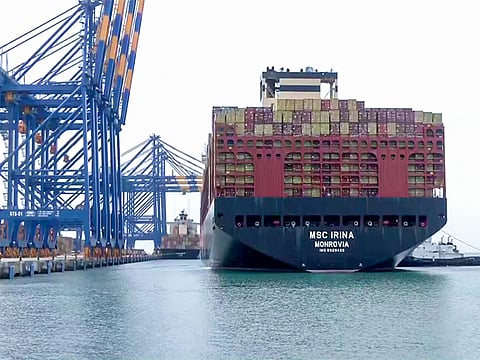
Recent signs of normalisation have already emerged, with three Indian-flagged oil tankers carrying more than 8,60,000 tonnes of crude and an Indian LNG carrier successfully resuming transit through the strategic waterway after the US-Iran agreement.
Ritolia said Russian crude continues to anchor India’s oil import strategy.
June imports are expected to exceed 2.35 million bpd, potentially setting a record, supported by competitive discounts and steady refinery demand. Russian supplies are likely to remain a major part of India’s import basket even after Hormuz normalises, given favourable economics and supply security considerations.
Indian refiners have also increased purchases from the Atlantic Basin and Venezuela since March to offset tighter Gulf supplies. Venezuelan crude imports are estimated at 3,00,000-4,00,000 bpd in June, providing refiners processing heavier grades with another diversification option, although sanctions risks and production constraints remain concerns.
The biggest shift has occurred in LPG supplies, with the US emerging as a major supplier after disruptions affected Gulf shipments. The shift has been supported by a long-term supply agreement signed last year, though longer shipping distances have increased freight costs.
According to Ritolia, Gulf suppliers are expected to gradually regain market share as Hormuz normalises, although India’s sourcing base is likely to remain broader than before the crisis.
The disruption has accelerated India’s diversification efforts. Crude imports were cushioned by increased purchases from Russia, Brazil and Venezuela, while LNG buyers sourced additional cargoes from countries including Oman, Nigeria and the US.
The reopening of Hormuz is expected to ease freight costs, reduce supply risks and help moderate global energy prices, though a full return to pre-crisis trade patterns could take weeks or months as shipping companies, insurers and traders gradually rebuild confidence in the route, PTI reported.
(With PTI inputs)
