
Few of us would have passed out of kindergarten without having learnt the popular nursery rhyme, ‘Ring a Ring o’ Roses’. Have you ever wondered what the rhyme actually meant? Historians say that the Mother Goose rhyme is a macabre parody of the Great Plague of London also known historically as the Black Death. This deadly disease which spreads from infected rats, killed thousands of people in the year 1665. One of the first signs of contracting the disease was a ring of rose-coloured spots. People carried little posies of herbs in their pockets as a protection against the disease, both of which the rhyme talks about in the first few lines. Sneezing was taken as a sure sign that you were about to die of it, and the last metaphorical line ‘We all fall down’ referred to the death of the victim.
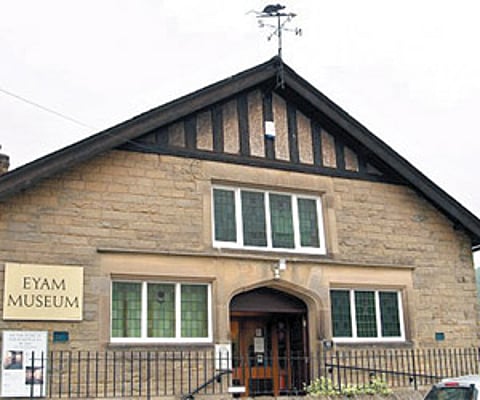
Seventeenth century London was ravaged beween 1665-1666 with a mortality rate of nearly 1,00,000 people. The bubonic plague annihilated nearly 20 per cent of London’s population. The English outbreak is thought to have originated from ships arriving from Netherlands which brought infected merchandise from Amsterdam. Though there are several interesting stories woven around the Great Plague, the most powerful one is about the sacrifice of a village called Eyam in Derbyshire. Referred to as the ‘plague village’, the village chose to isolate itself rather than let the infection spread to other parts of England.
The village tailor George Viccars was the first to die within a week after a bundle of flea infested cloth was delivered to him from London. The villagers, under the able leadership of their rector Rev William Mompesson, took a joint decision to ostracise themselves from the rest of England in order to check the further virulence of the disease. A number of precautions were introduced by them to slow down its spreading. Some measures included the arrangement that families were to bury their own dead in order to reduce the risk of infection. To try and prevent the spread of the plague within the village, church services were conducted in the open air. However the most commendable of all was the extraordinary self- imposed quarantine or the ‘cordon sanitaire’ which effectively cut the entire village off from the outside world. Even to this day, tourists can spot the ‘Coolstone’ — a stone outside the village in which Eyam’s residents left money soaked in vinegar in exchange for food and medicine that were brought to them from markets outside the village. Vinegar was used as a disinfectant to soak the coins since it was known to kill the germs spreading the infection. Though Eyam lost several of its sons and daughters to plague, several villagers lived to tell the tale because of their pro-active preventive measures. Interestingly, the unofficial grave digger of the village, Marshal Howe, was one of the survivors who despite handling many infected bodies managed to escape the disease. Some researchers believe that Eyam played a significant role in genetic research because the survivors of the plague in Eyam may have had a unique genetic mutation that they call ‘Delta 32’. This is a very rare mutation, and if inherited from both parents may provide immunity against even HIV/AIDS. This bio genetic research on Eyam is an ongoing process. However, the collective responsibility and the courageous decision of the people of Eyam transcend the boundaries of modern scientific research. Eyam today is best remembered as a brave little village for the sacrifices made by her many children who gave up their own lives in order to save the lives of several hundreds of their fellow human beings.