
There are millions of them sitting on the palm of your hand right now, hundreds inside your stomach helping digest food. Some are busy changing milk to curd and others are helping trap nitrogen to strengthen the legume crops in a farm. And yet, the tiny microorganisms that are such a crucial part of our world are seldom given the recognition they deserve. To make amends, our country is soon to raise a microorganism to the same pedestal as the peacock, lotus and the tiger. We will soon have a national microbe of India.
Microorganisms might be small but carry a big responsibility on their shoulders. In nature, they are primarily the decomposers, organisms that ensure that once a living being dies, the essential nutrients are broken down to become a part of the environment again to be utilised by other living beings.
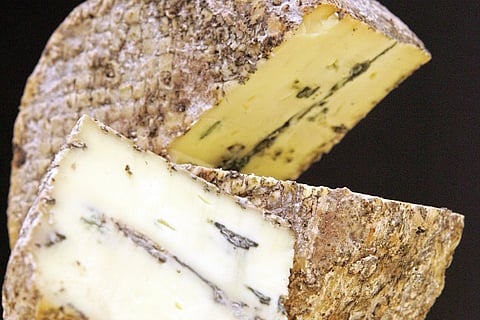
For humans, even before the advent of technology and industries, microbes have assisted in a number of tasks. The bacteria lactobacillus is the wizard that magically transforms milk to curd or cheese. Yeasts have been bakers’ friends for centuries as they help in the making of buns, breads and puffs. In the rapidly changing modern world too, microorganisms ensure that rivers are clean, and air is pollution free.
Fantastic Eight
The Centre for Environment Education (CEE) and the Ministry of Environment and Forests (MoEF) have therefore decided to recognise these unsung heroes and have shortlisted eight of the star microbes for adaptation of one as the national symbol of the country. And the chance to select one has been offered to school children like you.
You can vote for your favourite microbe either by visiting their website, or cast your vote by visiting the ‘Science Express-Biodiversity Special’ train, which is passing through various cities across the country.
The fantastic eight selected from the gamut of microbes in this world are the Rhizobium — soil bacteria that fix nitrogen inside root nodules of legumes; Wild Yeast — used in bakery products; Lactobacillus — the essential bacteria for fermentation, used to make cheese, curd, pickles and other products; Blue Mould — the source of important medicine penicillin; Bacteriophages — 100 times smaller than a bacterium but packed with power to eliminate dangerous microbes like the E Coli.
Then there is Spirogyra — the supposedly dirty algae that floats on rivers and ponds, but actually helps traps lots of carbon dioxide from the environment; E Coli K 12 found in our gut that helps in digestion; and, last but not least, the mighty Mucor — a fluffy cotton-like fungus that can break down hard wood within no time.
From leather to chocolate, medicine to cakes, microorganisms touch our lives in an astounding number of ways. It is nature’s way of telling us that every species in this world is a significant creation that helps all other creatures survive, no matter what the size.
Even if you can’t vote for the national microbe, the next time you are relishing a chocolate cake or tightening a leather belt spare a thought for the unseen organism creating a big difference in our lives.
