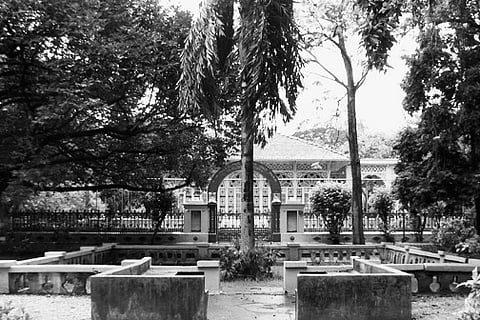

The first thing you realise when you reach Shantiniketan in Bolpur, Kolkata, is that Rabindranath Tagore’s legacy does not belong just to him, it belongs to the town of Shantiniketan. Every tonga-wallah and jhaal muri vendor will tell you where to go and what exactly to do. And if you want to do yourself a favour and enjoy a little unconventional tourism around this University-town, then just hop on to one of the cycle-rickshaws and allow the rickshaw-wallah to show you around the town. I did just that, and getting to know Shantiniketan through the people who own the place is a different experience. Our ride started at the Uttarayan Complex around noon time. And as you start winding through the lanes and bylanes of Shantiniketan you will soon realise that taking a rickshaw was the best decision ever because all other tourists in vans and cars are puzzled as to which way to go on the narrow lanes.
For most of it, Shantiniketan is much like any little town in West Bengal, it is only the vast buildings which have been a part of India’s history that set it apart from the rest. As we slowly made our way through the town, the rickshaw-wallah started narrating tales about the trees under which Tagore penned his songs and the roads he walked on when he was melancholy. One of the roads that we took to reach the tribal Santhal village is the legendary road that Tagore took regularly to visit a little water body. “That very road happens to be the path that Tagore talks about in his song “Gram chada oi rangamatir poth”,” explained the rickshaw-wallah. Around lunch time, the rickshw-wallah just dropped us at the house of a Bolpur local and directed us towards the front-yard for our meal. Upon entering, we realised that the generous Bengali home feeds tourists at a very minimal cost inside their home. And nothing could beat the lipsmacking sweet-mango chutney and fish fry that was served to us.
He then took us right into the heart of the Santhal village, which we surely could not have visited if we were by ourselves or travelling in a car. It was when we started seeing little mud houses with paintings on the walls that we realised that tribal abode is just three kilometres from the town of Shantiniketan. The rickshaw-wallah warned us to not disturb the locals and just take in the beauty because the Santhals are a shy tribe who do not take easily to intruders. If you are ever planning to visit Shantiniketan, you should definitely visit the university, Tagore’s home and the various other buildings he personally designed. But don’t forget to take a rickshaw ride down those red soil roads right into the Santhal village.
