
When there is a burgeoning rise in talented independent film makers and an aware audience, who can make or break your chances of a block-buster hit, you know film festivals have crossed the threshold of entertainment.
City Express speaks to some members of the film fraternity to see what they think of this new trend.
The curator
Shai Heredai, who has been organising the film festival titled Experimenta for about a decade in Bangalore and Mumbai now, says, "As a curator, I feel that the State needs to be more actively involved, in terms of providing a venue that supports the screening of films of different formats allowing organisers to bring in films from all across the world as well as helping with the funding." She also adds that one of the most important things is gaining access to the National Archives. "I would like to show a variety of historical and contemporary film to the audience. Only then is a dialogue between the two genres possible. Samskara, a seventies' film written by U R Ananthamurthy and directed by Pattabhi Rama Reddy, which will be screened at Experimenta - 2013 has been sourced from the archives in Arsenal and Germany, though it's an Indian film," she says.
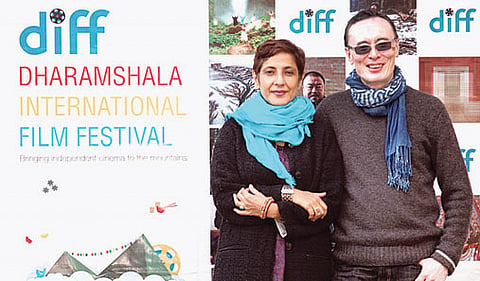
Ritu Sarin, co-founder of the Dharamshala International Film Festival, which just concluded it's second edition last month says, "So many independent films are made every year, and there are not enough venues to play them. I think as curators, we have a responsibility to air films that are relevant to outsiders as well as the local people, especially for a festival like ours. The only problem now is to keep the festival sustainable and moving. Raising money is a daunting task. Either a film festival is government funded or you get a huge corporate sponsor. It's not an easy task"
The producer
Guneet Monga, one of India's leading producers, who gained fame through her prolific work on Anurag Kashyap's films, says, "In simple terms, film festivals broaden your perspective of the world and the film industry. It opens up a whole new platform to interact and network. If a film manages to make a mark internationally, then many more roads open up for the next film. Cinema is meant for global consumption and I think we need to get away from a myopic view we treat Indian films with. The world is willing to look at good Indian content, so why be shy about it?"
She thinks both international and homegrown fests are important to independent films. "Every festival helps. Today The Lunchbox, Ship of Theseus and so many others began as festival films. Look at where they are today, each of them very successful. Indian films have been picked up from Indian markets such as NFDC’s film bazaar, taking them to international platforms," she says.
The film-maker
Dylan Mohan Gray, director of Fire in the Blood, says "Film festivals are essential for independent films, especially if you want to reach global audiences. Of course, it’s very difficult to get selected for the top festivals, so this option is not open to every film. Fire in the Blood has played in a lot of festivals in about 25 countries, winning a number of awards, and this has made a huge difference, both in terms of the profile of the film as well as international sales of the rights."
