
Goan cuisine is influenced by 400 years of Portuguese colonialism with the original Hindu/Konkani roots. No Goan dish is deemed complete without some amount of seafood. As Goa is a coastal state, such a demand is not unreasonable. The staple in Goa is seafood. Even in the swankiest of joints, creatures of the sea that are obnoxiously priced elsewhere are available at shockingly low prices.
The coastal climate of Goa is perfect for spices to grow. A trip to the Sahakari Spice Farm in South Goa is an educational experience where you can actually see the spices in their nascent stage growing on trees and shrubs. Four of the world’s most expensive spices can be found here — vanilla, cardamom, clove and cinnamon. These spices are used to flavour the delicious food that is served to people who visit the farm.
Since seafood and spices are native to this smallest State, fish curry with rice is the basic food that the locals eat. Kingfish, pomfret, tuna, lobster, prawn and crab are delicacies available for tourists.
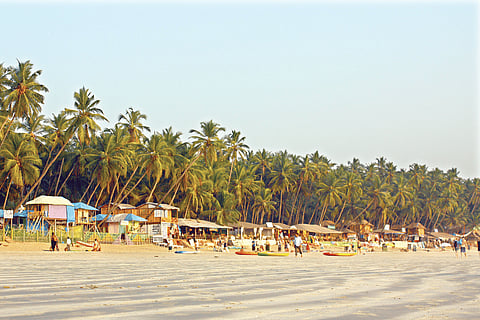
Shacks or little huts with thatched roofs are restaurants that serve authentic Goan dishes. These shacks can be found on beaches as well as on the highway. You could say that they are the dhabas of Goa. They make for a good spot if you want to get out of the sun and enjoy a cool beer with hot tandoori prawns.
Calamari (squid) prepared with a sauce made with local chillies and kokum is another desired appetiser. Incidentally, this red chilli paste that serves as a base for most Goan dishes would not have existed if it wasn’t for the Portuguese. They were the ones who got with them from Brazil chillies, potatoes, tomatoes, pineapple and cashews.
The cashewnut is important for Goas’s economy. It is found in almost every nook and cranny of the State. It is sold in souvenir shops. In fact, there are shops in Goa that just sell cashew and its by-products.
Kokum is a fruit that is indigenous to the Western Ghats and is prevalent in Maharashtra and Goa. The fruit looks like a plum and is from the mango family. Kokum sharbat, a soft drink that is made by mixing a concentrate of the juice of the kokum fruit with water is very good for the digestion and has a cooling effect on the body. It is widely available in Goa. Kokum has a tangy — sweet and sour — flavour and goes well with chillies and spices to make a scrumptious curry that can be a base for vegetables, chicken, fish, pork or beef.
As much as Goa is known for its seafood, I found a dessert to be the most delectable thing for my taste buds.
Bebinca can best be described as a layered coconut cake, is a wonderful concoction and a must try for anyone visiting Goa. The traditional Bebinca has 16 thin layers. It is served warm with vanilla ice cream. Bebinca is a delicate little dessert that melts in the mouth filling it with indescribable deliciousness.
Goa is one of the major spots in the world that a person on a food journey should not miss out on. The hybrid Indo-Portuguese food is like no other found anywhere else in the world. It has something for everyone.
