
In the lore that surrounds the Indian national movement and its cast of characters, it is common, especially in Bengal, to pit Subha and Jawaharlal against each other. Their relationship is seen as the great rivalry in which Jawaharlal emerged triumphant only because an accidental death removed Subhas. A more extreme view is that Subhas, had he been alive, would have been a contender for the prime ministership of independent India and would have fashioned India along different lines than what actually happened under Jawaharlal. The account of this great divide between the two leaders hinges, in terms of hard evidence, on the statement that Subhas made to his nephew immediately after Tripuri that no one had done greater harm to his cause than Jawaharlal. The previous chapter noted that at the same time as Subhas was expressing his grouse against Jawaharlal to his nephew, he was inviting Jawaharlal to visit him to discuss the situation. The latter’s response was that he could not say no to Subhas. Jawaharlal consistently interceded with Gandhi to settle the issue with Subhas. This does not give the impression of a relationship laced by bitterness and hostility.
The other piece of evidence that is cited to show their rivalry pertains to something that Jawaharlal said in 1942. In April 1942, he said: ‘Hitler and Japan must go to hell. I shall fight them to the end and this is my policy. I shall also fight Mr Subhas Bose and his party along with Japan if he comes to India. Mr Bose acted very wrongly though in good faith. Hitler and Japan represent the reactionary forces and their victory means the victory of the reactionary forces in the world.’
What is evident from this statement is that it does not contain a personal attack on Subhas. Jawaharlal was taking an ideological and political position against Subhas’s decision to seek the help of the Axis powers. He did not doubt Subhas’s ‘good faith’. This statement must be read in conjunction with another statement he made around the same time: ‘I do not .doubt the bona fides of Mr Bose. I think he has come to a certain conclusion which I think is wrong, but nevertheless a conclusion which he thinks is for the good of India.’
About the book
This fascinating book tracks the growth of these two towering figures against the backdrop of the independence movement, delicately tracing the contours of a friendship that did not quite blossom as political ideologies diverged, and delineates the shadow that fell between them—for, Gandhi saw Nehru as his chosen heir and Bose as a prodigal son.
About the author
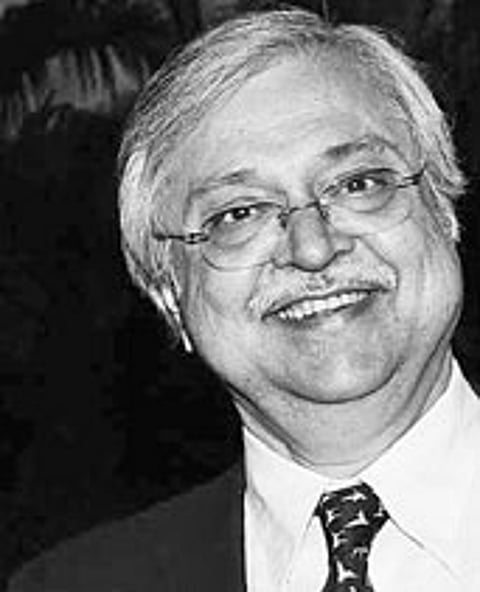
Rudrangshu Mukherjee is vice chancellor and professor of history at Ashoka University. He was the editor of the editorial pages of The Telegraph, Calcutta. author and editor of several books which
include Awadh in Revolt, 1857-1858: A Study of Popular Resistance, and Spectre of Violence: The 1857 Kanpur Massacres, as well as The Penguin Gandhi Reader.