
BANGALORE: The greatest demon of modern times rides on our back, unannounced, unwelcome, and we bear the brunt of our actions as innocent victims of our own lifestyle. The word is stress. Alien to none, stress is a part of our lives. Today we have equipped ourselves with latest technologies, the grandest comforts of life, a career to boast of, a supportive family, yet the very same things which are our source of happiness, also sometimes cause pain.
Worry, tension, stress are like termites which eat us from within until one day we succumb to it. But what does stress do to us? Isn’t it just a feeling that goes away?
Insomnia, fatigue, chronic pain, depression, high blood pressure, sexual problems, inability to take decisions, early aging are just some of the side effects of stress. In a stressful situation our mind interprets the stressful event as an emergency threat; it triggers an immediate response in the autonomic nervous system.
Our stress response kicks in and activates the sympathetic nervous system (SNS). Our body is flooded with hormones which heighten the senses, increases heart rate and blood pressure, and focuses the brain’s activity. The parasympathetic nervous system (PNS), which is responsible for physical relaxation and emotional calm, becomes overwhelmed by this sympathetic response. With the sympathetic nervous system in charge and the parasympathetic overwhelmed, you respond with energy and focus, but also with anger, anxiety, and aggression.
Stress is good when controlled. It pushes us to do our task at hand with that extra dash of adrenaline. The primal reaction known for stress is fight-or-flight. So we can effectively fight off or flee from life-threatening danger.
This important survival mechanism is useful when you need to slam on the brakes to prevent a car accident or run away from an attacker. But when we are continuously and constantly stressed, SNS overshadows PNS, which weakens our nervous system thereby weakening our vital organs, our body and mind.
It’s not all bad news. We can control stress. We can avoid the panic attacks; we can even use it to our advantage with a little bit of determination and a whole lot of awareness and relaxation.
Easier said than done you may think. But tackling stress can be lot of fun. Take time out for yourself step out of the hustle bustle and treat yourself to sweet music, some games, a warm hug, good workout, walk by the park - anything that relaxes your nerves, stabilises the heart rate while reducing stress.
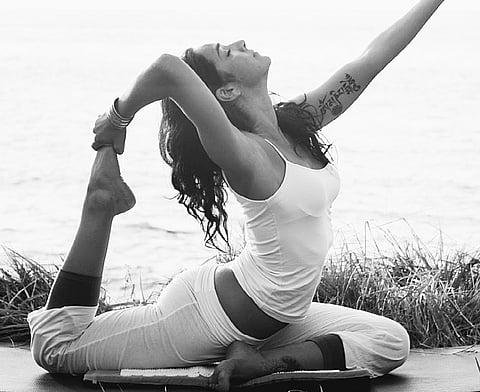
What works best for me is yoga. It’s not just a quick fix. Yoga helps to soothe your nerves, calms your mind and lets you control your reaction to stress, automatically allowing you to use stress to your benefit by increasing your energy and not taking a toll on your health.
Pay attention to how your body and mind react to the “stress” of Paschimottanasana or any pose that offers clues about how you typically react to stress in your life. One common response is to ignore sensations and force yourself forward, fighting against your tight hamstrings. Another is to come out of the pose to avoid the challenge entirely.
Both strategies are variations on the same theme: fight-or-flight. By training yourself to actively observe while staying calm in poses, you’ll be able to do the same thing when difficult sensations, thoughts, or emotions arise in the face of stress. Instead of going into your habitual reaction mode, you’ll notice what’s happening while staying present enough to choose an appropriate response.
Yoga not only brings fitness and vigour to the physical body but also harnesses our will, emotions, expands our power of insight, vision and analysis. It recognises and utilises four major faculties in man: intellect, emotion, will power and executive capabilities through the sensory and motor apparatus. Through Jnana yoga we study reality, goal of life, happiness and misery etc. The origin of stress and its mechanisms of growth can be understood through this path. Bhakti yoga helps gain control over our emotions and thus helps us to lead a life full of love, harmony and Bliss. Astanga yoga, Raja yoga caters to the entire body-mind complex, harnessing the will to face stress. Karma yoga teaches us the art of ‘working in relaxation’ with total ‘awareness in action’.
Yoga doesn’t just provide ways to burn through stress or escape from it. It doesn’t only offer stress-reduction techniques for anxious moments. It goes deeper, transforming how the mind and body intuitively respond to stress. Just as the body can learn a new standing posture that eventually becomes ingrained, so the mind can learn new thought patterns, and the nervous system can learn new ways of reacting to stress.
If you’re practicing yoga every day, you’re preparing for what life brings and stress free life becomes your reality.
