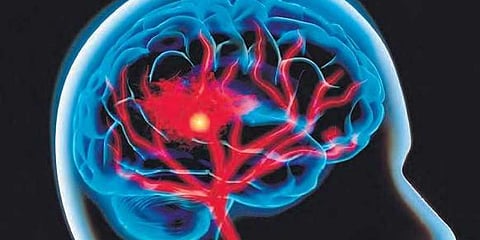

BENGALURU: India is reeling under the burden of non-communicable diseases (NCDs) and stroke has emerged as one of the major threats among NCDs. In India, stroke is the second leading cause of death and the leading cause for disability. Every one in five individuals is at a risk of developing this deadly disease.
Understanding stroke
A stroke occurs when blood flow to the brain is disrupted through either a blocked blood vessel in the brain (ischemic stroke) or a ruptured or burst blood vessel in the brain (hemorrhagic stroke). Depending on the severity of stroke, loss of brain and bodily function or death may occur. Motor function, speech and memory may get impacted.
Eighty per cent of stroke cases are ischemic strokes and are, in general, painless. Since the patient is idle or quiet during a stroke, due to loss of motor functions, there are no dire signs as opposed to a heart attack. Hence, it is difficult to notice and understand the emergency. Brain is an unforgiving organ and cannot survive five minutes without blood supply. This causes a person to lose two million neurons every minute, thereby disconnecting the overall functioning of the body.
Lack of awareness:
A challenge
Stroke cases have surged due to a variety of factors including sedentary lifestyle, hypertension, smoking and obesity caused due to eating junk food. These lifestyle-based risk factors are very commonly observed in metro cities. Despite the vast number, stroke cases in India still go unreported. Especially in Karnataka, majority of stroke cases are not reported due to lack of cognizance about stroke or on the treatable options.
Treatment options
The current technological advancements in medicine enable doctors to potentially reverse the paralytic stroke occurred due to ischemic stroke if patient reaches the appropriate hospital in golden hours. Mechanical thrombectomy (stent retrievers with which large vessels can be opened) has been a boon in stroke treatment.
It is critical for a person to reach a stroke-ready hospital within six hours (golden hours) of the incident. Unfortunately, only one per cent of the patients reach within this golden period, rendering their case untreatable. Ninety-nine per cent of the patients go to local nursing homes where there is no CT scan or neurological facility available and lose precious time in just detection of the condition rather than
initiating treatment which is quite crucial. Every individual needs to be aware of stroke symptoms and knowledge of stroke ready hospitals in their vicinity and reach within the golden hour.
Strokes can be managed effectively with adherence to treatment and lifestyle changes like:
When to seek medical attention:
B-Loss of Balance
E- Lack of clear Eyesight/ Vision
F- One side of the Face droops
A- The inability to raise one’s Arm fully
S- Speech is slurred, repeated, "drunk like", confused
T- Time matters - Every minute causes the loss of two million neurons
The author is an interventional neuroradiologist, Apollo Hospitals, Bangalore
