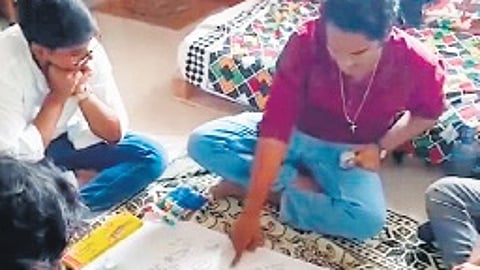

BENGALURU: Men don’t cry. They protect and serve, respect and honour. Occasionally, they might be allowed to let a tear escape in solitude, but under no circumstances can they cry, express, or nurture. But what happens to these bottled-up emotions? They often turn into rage, perpetuating a cycle of violence and abuse that harms both men and women across generations.
In a world that constantly pressures men to disconnect from their emotions and sense of self, Sahil Raina began organising therapeutic circles to build a community that encourages men to express themselves. “Why I started this is because, through my own experience, I realised that many aspects of my masculine nature didn’t feel safe for me to embrace,” says Raina, a wellness practitioner.
“We try to understand where these aspects come from – what is often referred to as the masculine shadow – the need to dominate, the outbursts of anger, and an unhealthy relationship with power. I realised that my inability to express myself emotionally and be vulnerable was a generational pattern common among most men.”
The sessions explore various themes and worldviews, including archetypes like the warrior in relation to masculinity. “We tend to think of a warrior as someone who is strong and cannot feel fear, but we explore how to redefine the warrior as someone who is willing to embrace his vulnerability and learn that underneath this display of strength, there lies a scared child waiting to be held,” he adds.

Using art to break constructs
At the Untitled Arts Foundation, Artistic Director Anuradha HR explores masculinity through a different lens – one that combines research with artistic expression. For Anuradha, the exploration of masculinity is intertwined with broader cultural constructs of gender. “Just as femininity differs in every cultural context, so does the idea of masculinity,” shares Anuradha, who recently conducted a theatre art workshop called ‘Being a Man’. “There are stereotypes that ‘men do not express,’ ‘hold their emotions close’ and ‘do not cry’. While this notion is being questioned intellectually, it has yet to translate into meaningful groundwork,” she says, adding that this narrative also ‘leaves men defensive, which stems from their cultural upbringing.’
Similarly, city-based creative art therapist Shravanthi Venkatesh uses art, storytelling, and movement to create a safe space where men can reflect on their emotional landscape. “These sessions are reflective; they don’t have a specific outcome,” explains Venkatesh. “Instead, they provoke thought, question relationships, ethics, and culture.”
One of the biggest crises in masculinity today, Venkatesh observes, is the disconnection from self-identity. “We are seeing women getting to know themselves, but men often seem to withdraw,” she says. “We often don’t hear narratives that challenge traditional roles of men, leading to the false belief that such narratives don’t exist. But there are many men, young and old, who are truly invested in these changes.”
Expanding the conversation
While Raina sees growing acceptance for such gatherings, he also acknowledges that they are still few and far between. “It’s not something that happens regularly or consistently,” he notes, adding that there will “always be a resistance in diving into uncomfortable issues but what’s important is to create a safe container for men to express themselves authentically.”
As Anuradha notes, “We cannot work only with women and expect equality to be achieved; it has to be a two-way process where both genders’ constructs are challenged.” Venkatesh agrees. “For any shift to occur, individuals first need to question their existing beliefs – the ones they’ve inherited from generations. This space to question is lacking, and that’s one reason we don’t see the kind of significant shifts in collective outlook that we desire,” she adds.