
BENGALURU: The last ruler of Mysore, Jayachamarajendra Wadiyar inherited a prosperous kingdom in 1940. Although his seven-year reign was brief compared to his predecessor Nalwadi Krishnaraja Wadiyar’s four decades, it was far from uneventful.
While Krishnaraja Wadiyar modernised and transformed the kingdom into an industrial and cultural powerhouse, Jayachamarajendra Wadiyar, often referred to as the Philosopher King, focussed on preserving heritage while fostering progress.
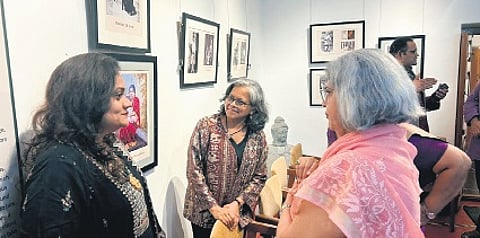
Ascending the throne amidst the global conflict of World War II, he continued his predecessor’s efforts, navigating a tumultuous era while upholding the kingdom’s legacy. An ongoing exhibition of rare photos, documents, and other interactive elements at the Indian Institute of World Culture (IIWC), Basavanagudi is offering a rare glimpse into the often-forgotten monarch who played a key role in shaping Bengaluru’s present.
HH Jayachamaraja: A Life of Purpose and Passion opened earlier this month with a concert at Chowdiah Memorial Hall featuring Wadiyar’s compositions, and will be open until July 29 at the IIWC’s Wadia Hall.
“The inspiration for this exhibition stems from my long-standing commitment to chronicling our history, particularly that of Bengaluru and Mysuru,” says Maya Chandra, co-founder of Maya Films and co-curator of the exhibition. “Despite his significant impact on the development of Bengaluru, there is very little documentation about Jayachamarajendra Wadiyar.

Under his reign, areas like Rajajinagar and Jayanagar were developed, and contributions like the Kanteerava Stadium were established. His efforts expanded his predecessor Nalwadi Krishnaraja Wadiyar’s initiatives in turning Bengaluru into a potent city, yet today, his contributions are barely acknowledged.”
The exhibition features rare early pictures of Jayachamarajendra Wadiyar, including a photo of him as a toddler on his mother’s lap and rare paintings of him. It takes visitors through various stages of his life, showcasing his early years, graduation from Maharaja’s College, his marriage, and the turbulent times of World War II when he ascended the throne in 1940. A significant highlight is how the Maharaja navigated the independence and post-independence periods.
“We have photos from his reign between 1940 and 1947, although documentation from that time is limited. More extensive documentation exists from later periods, showing his interactions with leaders like Jawaharlal Nehru, Vallabhbhai Patel, and Dr Radhakrishnan. Notable exhibits include photos of him supervising the construction of Vidhana Soudha and addressing the legislative assemblies,” shares Chandra. “There is also a section on his war efforts, including the funding of the World War II. Additionally, there are several significant documents, including his ‘munji’ invitation and his first wedding invitation.”
The exhibition includes interactive features with QR codes linking to films, oral histories, and podcasts. “We’ve produced a nine-episode series, Remembering the Last Maharaja of Mysore, featuring interviews with his family. There are audio recordings of his speeches and a podcast series, The King Speaks, where family members read his speeches,” she adds.