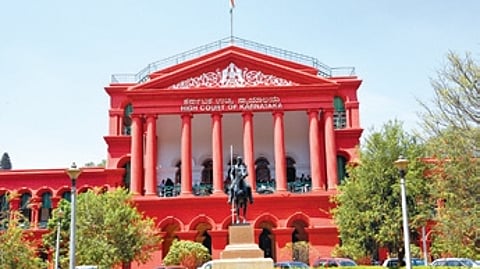

BENGALURU: Sri Shankaracharya Jayanti should be considered as a dharmic as well as cultural event. Though India is a secular country, it does not mean that dharmic and cultural activities should not be entertained, the High Court of Karnataka said recently while quashing an endorsement issued by the Greater Bengaluru Authority (GBA) rejecting permission for Malleswaram Brahmana Sabha Trust to celebrate Sri Shankaracharya Jayanti at yoga auditorium, Sankey Tank Park.
Justice MI Arun passed this order on a petition by the trust questioning the endorsement issued on March 18 by the Bengaluru West City Corporation, rejecting permission stating that the auditorium can’t be used for dharmic activities.
“Shankaracharya is one of the most revered acharyas of India, and the Advaita philosophy propagated by him is one of the foremost philosophical traditions of the country... In fact, the greatness of Indian civilisation is intertwined with its dharmic and cultural activities and removing it amounts to removing the soul from the country.
The Constitution itself has pictures from the Indian civilisation, a Gurukul - an integral part of the Indian education system, the Ramayana, the Gita, Gautama Buddha, Mahavira, and the like. Thus, the celebration of Indian culture, which is intertwined with dharma, can never be considered illegal or unconstitutional. In fact, the goodness in the same has to be promoted for the betterment of society,” the judge observed.
Terming the endorsement unreasonable and arbitrary, the court, however, said that the petitioner cannot, as a matter of right, claim that the place should be given to them to celebrate the jayanti. If the petitioner satisfies the criteria and if the auditorium is available, then the corporation should consider the request, the court said.
The petitioner contended that the state has been permitting certain activities in the auditorium and its institutions. It was also given to private individuals for programmes, the petitioner said, providing evidence in support of his argument.
The corporation contended that the auditorium is generally not given for religious and political activities. However, it was unable to contravene the submission made by the petitioner’s counsel. The corporation, however, submitted that the auditorium is a yoga centre and if it were to be for yoga-related activities, permission would have been granted.
