
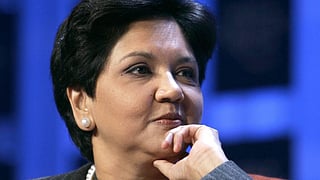
Can ambition alone take a woman to the top, or does the ecosystem matter just as much? This question has resurfaced after former PepsiCo CEO Indra Nooyi remarked, “I could never have become CEO in any other country in the world, including India,” crediting the US with offering opportunities that enabled her coveted rise. Her comments, during a chat with former US Secretary of State Condoleezza Rice, sparked conversations about merit, workplace culture and the structural barriers women continue to navigate. With the debate unfolding, we speak to Bengaluru founders and experts to understand whether India’s entrepreneurial and corporate landscape has changed enough to nurture women leaders or whether Nooyi’s observations still hold true.

Few women were appointed to leadership positions anywhere in the world when Indra Nooyi began her career. We don’t know if she would have become a CEO in India or not, but the numbers then and now tell us that few women made it to the top. Things have no doubt improved over time and more women are in leadership positions today, both in India and elsewhere. Women can show ambition and expect to be taken more seriously now. What hasn’t changed, though, are the unarticulated assumptions and judgements about women’s capabilities and the resulting discomfort, and at times even hostility, in the workplace.
At the time when Indra Nooyi took on the position of CEO at PepsiCo, the professional landscape of India was still evolving, with only a few women in leadership roles across industries. However, over the past two decades, India has emerged as a country that is providing equal opportunity for women and men, alike. We are seeing this across industries where women today are in important leadership roles, driving organisations and setting the bar higher. Real estate companies, through industry bodies like the Confederation of Real Estate Developers’ Associations of India (CREDAI), have made a significant push to encourage gender diversification and inclusivity within the sector.
We don’t need to take Indra Nooyi’s remarks personally. The US didn’t necessarily remove bias from her journey; it created systems that made her success visible and recognised faster. India is not short on capable women CEOs. If there is a gap, it lies in the systems that identify, mentor and elevate women leaders early enough. I see her comments as a structural critique rather than a verdict on individual women. Her experience of working across two countries offers a valuable perspective that can serve as an input into how we build careers, rather than as the final word on the state of Indian leadership. Having worked as a CXO search consultant, I believe the issue is rarely a lack of talent. More often, it is a visibility gap.
Indra Nooyi was speaking about a time when she was a young working professional in India. The times have changed. In many ways, she is right to say that in that age and in that era, it would have been difficult for her to rise the way she rose in a Western context, particularly in the US. The US has always been considered a dominant melting ground for true-blue talent, and she achieved it out of sheer dint of her ability. I believe that India has become a more enabling space for women leaders. However, a whole host of women still tend to get overlooked, particularly during pregnancy and the postpartum period. That is something I believe is unfair and something corporates need to address in the Indian context.
It was disappointing, but not entirely surprising. India has incredible talent, but we’ve historically made it harder for women to rise to the very top. Things have definitely improved. There are more women founders, CXOs and investors than ever before. But unconscious bias, unequal caregiving responsibilities and the lack of women in top decision-making roles still hold many back.
We’re still in an age where we have to behave very masculine in order to be successful. India has a law where two per cent of boards should have a woman, but how many boards actually have one? We know that the McKinsey report shows that more women on boards and more gender diversity on the top results in better revenues. But we’re still in a phase where it’s a challenge. Is India working on it? Absolutely. But it is not just laws. It’s also conversations that need to change.
I see it as a reflection of the complex reality women in leadership still navigate. While India has produced remarkable women leaders, from Indira Gandhi as Prime Minister to Kiran Mazumdar-Shaw at Biocon and Falguni Nayar at Nykaa, the corporate leadership pipeline tells a different story. The data is sobering with barely five per cent of listed Indian companies led by women, and 63 per cent of listed companies have no women in key managerial positions at all. So, while Nooyi’s blanket statement may not fully capture India’s evolution, it reflects a truth about how structural barriers continue to limit women’s access to the corner office. The fact that she could rise to the top of a global company in the US, where her mentors, as she noted, were white men who ‘didn’t care if you’re male or female’, reveals something about how different ecosystems approach talent versus background.
Merit is not geography-specific. It exists if an institution chooses to recognise talent and nurture it, be it in the US or India. There are several examples of large international firms facing serious allegations over gender discrimination and meritocracy. Women CEOs are significantly underrepresented in the US. The measure of success for women in corporate India is not whether bias exists, because it exists everywhere, but what the country is doing to reduce that bias over time. On that count, India has made more progress than it is given credit for.
I only partially agree with Indra Nooyi’s statement because my own journey reflects both the challenges and the opportunities that exist in India. During my tenure with a top MNC, I was instrumental in initiating, securing and executing multi-million-dollar aerospace contracts with global OEMs and tier-1 companies. I believe those opportunities would not have materialised without my leadership and relentless efforts. Yet, when it came to selecting the next CEO, despite my contribution, they chose leaders from outside who were learning from me, who were asked to ensure that I did not leave the organisation. To me, that sent a clear message: my expertise was valued, my contribution was indispensable, but I was not seen as the right choice to lead. That reflects the unconscious bias many capable women continue to encounter. However, I do not believe this defines India as a whole.
(With inputs from Kalyani Warrier)