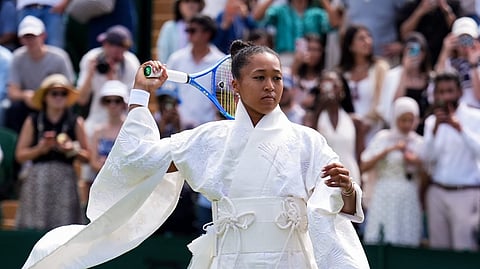

At Wimbledon 2026, the four-time Grand Slam champion Naomi Osaka turned heads when she arrived at the All England Lawn Tennis & Croquet Club in a custom white kimono-inspired creation that brought her Japanese heritage into one of tennis’ most traditional settings.
The flowing garment, with dramatic sleeves and intricate embroidery, featured elements of cranes and cherry blossoms, while an obi-inspired belt decorated with bows completed the look. She paired the ensemble with a traditional kanzashi, an ornamental pin, expanding the conversation around what sportswear can represent.
Freelance fashion designer-consultant Swathi Simha says athletes today have a greater scope to personalise their look without compromising the functionality, as she explains, “The outfits are still based on the physical demand and the ease required to play a particular sport. Based on this core objective, every sport has a specific colour, silhouette and style which gives a discrete identity, making it memorable for the spectators.”

Model-beauty connoisseur Kaustav Dey agrees, stating, “Fashion has become another language through which athletes can tell the world who they are. The best examples don’t just wear their culture; they reinterpret it in a way that feels personal and contemporary.” He believes Indian athletes can look towards the country’s design heritage without recreating traditional garments. “The challenge is knowing where to stop. Heritage should inspire the design rather than compete with the garment’s function. I’d avoid obvious motifs and instead draw from India’s colours, proportions, drape and craftsmanship. It should feel unmistakably Indian,” he says, while personal stylist and wardrobe consultant Rahila Khan says the subtle details often create a stronger connection. “The moment culture becomes the whole outfit, it becomes a costume. When it’s woven into the detail, maybe with a colour palette inspired by our textiles, one meaningful motif near the collar or cuff – it becomes identity,” she says.
Tennis-core
Osaka’s influence has also contributed to the popularity of tennis-inspired everyday style statement fashion like pleated skirts, polo tops, skorts and sporty silhouettes. “It feels polished yet effortless and has an old-money charm while looking extremely chic,” says fashion influencer Ananya Babu, suggesting, “A tennis skirt can be reimagined in a soft Kanjeepuram silk-inspired fabric with a bindi and graphic eyeliner inspired by traditional beauty”. Babu also believes athletes and public figures today have greater freedom to communicate who they are through fashion. “Fashion allows people to express where they come from, and often style tells their story before they do,” she notes.
As fashion houses continue collaborating with athletes, experts believe Indian designers can play a huge role in creating distinctive identities for sportspersons competing internationally. Khan calls such collaborations ‘long overdue’, saying they can give athletes a memorable presence while taking India’s craftsmanship globally. “Athletes on international stages need a distinctive visual identity, and India has the design talent to create that. These collaborations serve both sides, our creativity reaches a global audience, and the sportsperson gets a look the world remembers,” she feels. Meanwhile, Simha, who points to Osaka’s Indian Wells appearance in a yellow leopard-print Nike dress, believes such designer-athelete collaboration could strengthen India’s cultural presence at international events.
Killin' It Girl
Osaka’s kimono fit allowed her to bring cultural references into the grass courts. Inspired by Quentin Tarantino’s Kill Bill (Lucy Liu’s character O-Ren Ishii’s iconic kimono), the ensemble became another example of how Osaka used fashion to communicate identity. “I always tell people I like to be a video game character sometimes; I don’t want to be myself when I’m playing,” Osaka had said during her post-game interview, describing how she tries to embody the confidence and personality of figures who inspire her. Unfortunately, much before the tourney’s final, scheduled over the weekend, the Japanese star’s Wimbledon campaign ended in the quarter-finals after she lost to Karolína Muchová.