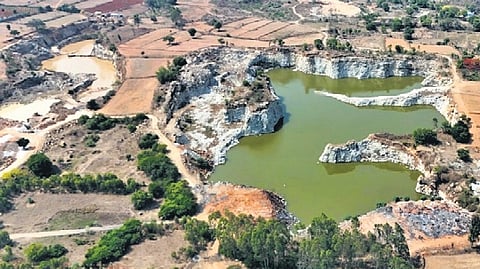

BENGALURU: For nearly a decade, Bettahalasuru gram panchayat on Bengaluru’s northern outskirts was regarded as a model for rural waste management. Its EcoGram initiative, which won the Gandhi Grama Puraskar and was studied by nearly 200 officials and representatives of institutions from across the country, has demonstrated the effectiveness of decentralised waste management, achieving over 96 per cent source segregation.
Today, the same gram panchayat is opposing plans to establish an 826-tonne-per-day Material Recovery Facility (MRF) at Tarahunise, estimated to cost Rs 76.44 crore, on a design-build-transfer (DBT) basis. Their concerns intensified after the Bengaluru Solid Waste Management Ltd (BSWML) recently floated tenders to construct sheds for the MRF at an estimated cost of Rs 48 crore.
Villagers opposing the project say the proposal is deeply ironic. They say a gram panchayat recognised for pioneering decentralised waste management is now being asked to process Bengaluru’s dry waste. “We do not want Bengaluru’s trash in our backyard. Let the city handle its own garbage,” several residents said.
Fourty-two-year-old farmer Dhanush Kumar said his family has depended on agriculture for generations. “Nearly 20,000 people live in Bettahalasuru panchayat, and a majority depend directly or indirectly on farming. We grow grapes, pomegranate, guava, sapota, ivy gourd, ginger and ragi, besides engaging in dairy farming. If this project comes up, it will pollute the groundwater, air quality and affect agriculture. We will oppose the project at any cost,” he said.
The village administration has unanimously passed a resolution opposing the project. Bettahalasuru Gram Panchayat President Hemavathi Nagaraj said the elected body had not been taken into confidence before the project was proposed. “We have repeatedly sought explanations from BSWML but have received no response so far. Is this a secret project? Why were elected representatives and villagers not consulted?” she said.
Pavithra T R, a resident, said villagers feared their villages could meet the same fate as Mandur and Mavallipura, both of which have long been associated with Bengaluru’s waste disposal. “We followed the rules, segregated our trash and built a model system. Instead of rewarding us, the government wants to bring Bengaluru’s waste here,” she said.
Former Bettahalasuru GP president Rajanee Prakash said the village spent years building a decentralised waste management system. “We have worked hard to keep our panchayat clean. Bengaluru must strengthen segregation at source and process its waste within the city instead of shifting its trash to surrounding villages.” He argued that the burden should not be relocated to rural communities.
Tarahunise Milk Producers’ Cooperative Society president M Munilakshmamma Munegowda said the government should identify an alternative site away from habitations and agricultural land if such a facility is required.
BSWML Chief Executive Officer Karee Gowda could not be reached for comments despite repeated attempts.
