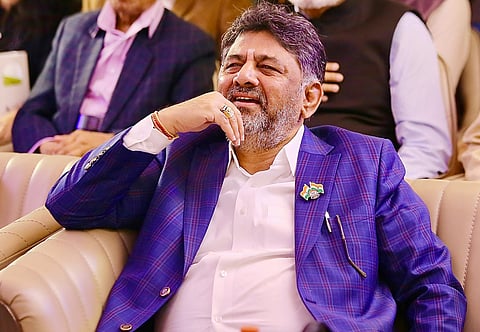

On Wednesday, DK Shivakumar is set to take oath as Karnataka Chief Minister in what is being described as a relatively low-key ceremony. Even so, the conversation around him has been anything but quiet. In the days leading up to it, his public appearances have drawn attention for their luxury touches, with accessories and designer labels circulating widely on social media.
What was once seen as individual style in politics is now read as part of a wider visual language around image and public perception. Fashion consultant and curator & advocate for Indian textiles Prasad Bidapa points to a sharp shift in how political dressing is consumed these days – visibility has changed everything about how leaders are seen and remembered. “Political dressing has become far more strategic than it was a decade ago. Earlier, clothing was largely functional and symbolic like khadi kurtas, white shirts, Gandhi caps and regional attire communicated ideology and identity,” he says, adding, “Today, every public appearance is amplified on social media. Politicians are far more conscious of fit, colour, grooming and overall presentation.”

But why do discussion around luxury brands generate so much public interest, especially when the involved are politicians? Entrepreneur-designer Michelle Salins, puts accountability on clothing which often communicates values. “Citizens expect politicians to understand ordinary lives and realities. So when a politician is associated with ultra-luxury brands, people question whether they align with their lifestyles. That’s why luxury brands generate so much discussion in politics,” she says, while Bidapa opines that the lens of public scrutiny functions differently for celebrities and politicians, with the latter being naturally scrutinised closely for they represent public institutions. He says, “Visible luxury can sometimes become controversial. However, there is a distinction between conspicuous consumption and celebrating craftsmanship. When a politician wears a magnificent handwoven textile created by Indian artisans, the conversation shifts from personal wealth to cultural pride, heritage preservation and support for traditional livelihoods.”
Independent creative director and stylist Aryan Gaurav Naidu, points out how politicians have ‘added layers’. “Former CM Siddaramaiah was recently spotted wearing Coach socks; DKS is often seen in Louis Vuitton and Dolce & Gabbana accessories. It has become a common sight among senior leaders” opines Naidu, who names Kangana and Rahul Gandhi as the best-dressed politicians.
Bidapa outlines an idea for DKS built around formal tailoring and Indian textiles, aimed at creating a consistent public appearance. “I would combine elegance, authority and Indian heritage. Beautifully-tailored white shirts and bandhgalas would remain central, but I would introduce exceptional handloom elements like Kashmiri Pashmina shawls, fine Eri silk jackets, handwoven stoles and bespoke textiles from across India,” he says, adding that the focus would be on discipline in dressing, using clothing that highlights craftsmanship and structure.
At public events, political appearances often carry a strong visual imprint, where clothing choices stand out as much as the occasion. In Tamil Nadu, now CM, actor-politician Vijay drew attention during his swearing-in ceremony when he appeared in a black suit. The look stood out in a setting where most attendees wore white or traditional attire. The choice also carried a cinematic quality for many observers with the formal styling and screen-like presentation reminding some of his film personas. In contrast, Rahul Gandhi has gradually changed his public appearances over time. He moved from a white kurta-based dressing in earlier years to more casual combinations such as polos and chinos during public interactions and campaign events. PM Narendra Modi, on the other hand, in often associated with sharply-tailored traditional wear that has become part of his public identity, while Finance Minister Nirmala Sitharaman has frequently drawn attention for her choice of sarees, including handloom and region-specific weaves worn during key moments such as the Union Budget presentation.