
Over the years, conversations around gender representation in cinema have become louder and more nuanced. With every commercial film released in a year, more than half are under audience scrutiny because they are not just watching films; they are also questioning the messages they send.
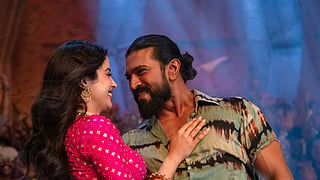
The recent addition to it is the controversy surrounding Peddi, starring Ram Charan and Janhvi Kapoor, and how a scene from it has sparked debates about agency, consent and accountability in storytelling. Adding to the discussion, recently actor Nithya Menen remarked that actors should question scenes they find problematic, reigniting debates about the responsibility of performers in shaping on-screen narratives.
Following the criticism, director Buchi Babu Sana apologised for the audience discomfort, stating he was ‘caught off guard’ about the scenes pointing to objectification – low-level camera angles and intimacy without consent. As the debate continues to unfold, CE gauges public opinion on the controversy among Bengalureans, including industry voices.

Cinema is a powerful medium. People get inspired by what they watch, and sometimes they even imitate it. That’s why we must be conscious of what we are giving back to society. Being an artiste means being fearless – not only while performing a role, but also while questioning things that don’t feel right. Actors eventually become the face of a story. Audiences remember them, connect with them and often see them as the character itself. That comes with a certain responsibility. Cinema is team effort, so responsibility cannot rest on one person. Writers, directors and actors have a role in ensuring the content they create is responsible.
I don’t really see Peddi as a controversy. I see it as a valid concern raised by an evolving audience. The fact that people are questioning these portrayals shows that audiences are becoming more conscious of what they consume. Female characters receive less agency because women themselves are often not perceived as fully human. How we see women in society inevitably reflects in the art we create. If women are viewed as objects, they will be written as objects. Whether you’re performing for six people in a theatre or millions in a cinema hall, you are leaving audiences with something. The question is: what are we asking them to feel, think about or normalise? We’ve spent years fighting for more nuanced representations. Why go backwards? Art has the power to help people question, reflect and make sense of their identities. That responsibility cannot be ignored.
The director is accountable because he is the creative force behind the film. Sometimes, artistes are compelled by circumstances, and to remain in the market, they have to take up these roles. Since the beginning of cinema, we have had ‘item’ songs, but they used to be a small segment, meant to draw certain audiences to theatres. But the heroine still had a strong, performance-oriented role. The character in Peddi is portrayed very unrealistically; you won’t find a real village girl in a costume like that. When an actor like Janhvi, who we associate with her mother, actor Sridevi, who was known for her strong performances, is not given an opportunity to do the same, it’s disappointing.
The question is not whether problematic portrayals of women existed; it’s whether we were willing to talk about them. Even if some of these conversations emerge under the guise of PR, reputation management, or damage control, they are still useful to have. I am less interested in assigning blame and more interested in what the conversation reveals about the relationship between cinema, audiences and accountability. Scripts are still largely written by men, often for a presumed male viewer, and within a commercial logic that treats the female body as spectacle while reserving action, transformation and heroism for male characters. But it is also worth asking why these stories continue to be made. The question is whether they feel secure enough to do so. Do they need the job? How will the questioning be received by people in positions of power? Will they be labelled difficult? While the central accountability may rest with writers and directors, every working mind in the process bears some responsibility. The larger question is whether everyone involved is genuinely free to question the choices being made.
I did not think the depiction of her style to be vulgar; I found her to be beautiful. Janhvi comes from Bollywood, so she may not have realised it would be received like this in the South either. When the director has a vision, it’s an actor’s job to convey that with the dialogue and costumes. Even when they feel something may be received negatively, we can make suggestions, but it’s eventually up to the director. If the director says ‘no’, we cannot push further because it leads to clashes. The negative comments she has received is unfair. I, too, experience demeaning comments online on some posts. People should remember to just not watch it if they don’t like it – there is no need to resort to cyberbullying.