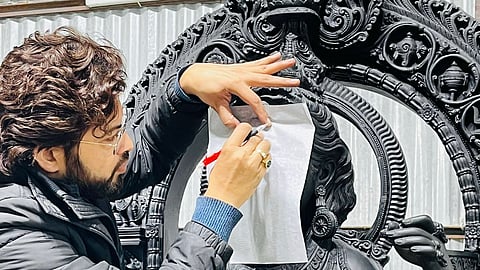

Designing a garment for a deity demands more than just understanding of textiles. Temple rituals, religious symbolism, seasonal practices and centuries-old traditions all play a role in the process. Through Shubhavastram, an initiative conceptualised by fashion and textile designer Manish Tripathi, students at the Sri Sri Institute of Fashion Studies in Bengaluru are being introduced to this specialised field as they work on seasonal garments for the Ram Lalla idol in Ayodhya.
Tripathi, who designed the garments of the deity at the Ram Janmabhoomi temple says temple textiles have remained largely overlooked despite their history and cultural significance. “Temple textiles are among India’s oldest living design traditions, yet they have remained largely undocumented and under-recognised. With the Prana Pratishta (consecration ceremony) of Shri Ram Lalla in Ayodhya, we felt this was a meaningful moment where heritage, craftsmanship and collective cultural sentiment came together naturally,” he shares.
The initiative gives students an opportunity to study temple textiles through research and design development. As part of the project, they will work with textile traditions such as Banarasi Brocade, Kanchipuram silk, Paithani, Muga silk, Patan Patola, Kota Doria, Chanderi and Baluchari. Each student group is assigned a craft cluster and encouraged to examine its history, techniques and cultural significance before developing temple-appropriate clothing.
A major component of the project is the creation of a complete seasonal wardrobe for the deity. The garments are being developed around the ritu chakra (cycle of seasons), with each influencing the choice of fabric, colours, motifs and construction, says Tripathi, explaining, “The design process begins with understanding agama guidelines and temple traditions, after which we align the designers with climate, festivals, darshan requirements and the strengths of different Indian textile clusters.”

The seasonal approach affects everything, from fabric selection to embellishment. Lighter textiles and softer shades are planned for warmer months, while festive occasions and cooler seasons call for richer weaves, zari work and layered constructions. The initiative unfolds in three phrases. Students begin with research into temple iconography and textile traditions before travelling to weaving clusters across the country. They then spend time with artisans, observing weaving and embroidery techniques and learning about the process behind the fabrics they are studying. The final phase focuses on range planning and prototype development.
The field visits are intended to give students a closer understanding of India’s craft traditions and the communities that sustain them. “The classroom can teach technique, but understanding comes from working with artisans and temple practitioners. When students spend time with a weaver, they begin to understand the labour and meaning behind every motif and weave,” notes Tripathi.
While Ayodhya is the starting point, the initiative is expected to expand to other temple traditions. Discussions are underway around projects linked to major temples. Designing for deities require students to study the customs and visual traditions associated with each temple before beginning the creative process. “Every deity has its own traditions and ritual requirements. Students first study the agama shastra, regional aesthetics, colour symbolism and draping styles associated with each temple,” he adds.
The programme also places emphasis on cultural sensitivity. Students attend sessions with scholars, priests, weavers and temple tailors, while prototypes reviewed before being considered for temple use. “We hope this project contributes towards preserving traditional weave structures, motifs and textile knowledge for future generations. We also want it to create long-term opportunities for artisan communities through temple-linked collaborations and sustained work,” he concludes.