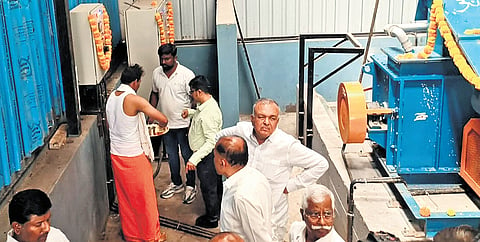

BENGALURU: A new five-tonne-per-day biomethanisation plant was inaugurated in Koramangala on Saturday, strengthening Bengaluru’s efforts to scientifically process wet waste and generate biogas. The addition complements the city’s first eight-tonne biogas unit, which has been operational since 2018.
The plant was inaugurated by Transport and Muzrai Minister and BTM Layout MLA Ramalinga Reddy as part of integrated solid waste management initiatives led by the Greater Bengaluru Authority (GBA) and Bengaluru Solid Waste Management Limited (BSWML).
Officials said that 12 biogas plants had earlier been constructed, of which six are currently operational. Each of these plants processes five tonnes of wet waste per day, collectively handling around 30 tonnes daily. The remaining six plants are proposed for renovation.
According to officials, one tonne of wet waste generates about 30 to 50 kg of biogas, with each plant producing nearly 200 kg from five tonnes. The gas is primarily used for captive consumption, while surplus is converted into electricity for street lighting.
At Ward 151, an upgraded 8.5-tonne plant supplies about 120 kg of gas daily to nearby hotels, generating approximately ₹28,400 per day at Rs 70 per kg.
In addition, four new decentralised biomethanisation plants are being developed, of which two have been completed, and two are under construction.
Large-scale projects planned
A major project is being planned in collaboration with GAIL Gas India for a 300-tonne-per-day plant. Further, a 1,000-tonne capacity facility has been approved at Kannahalli with a private partner, while a 50-tonne plant at Herohalli is already producing around 1,500 kg of gas, which is being converted into compressed biogas for sale.
With Bengaluru generating nearly 3,000 tonnes of wet waste daily, authorities aim to scale up biogas production under an integrated tender system. By-products such as sludge will be converted into liquid fertiliser for agricultural use.
Officials have also encouraged households and commercial establishments to install small biogas units, costing around ₹20,000, to promote decentralised waste management.
