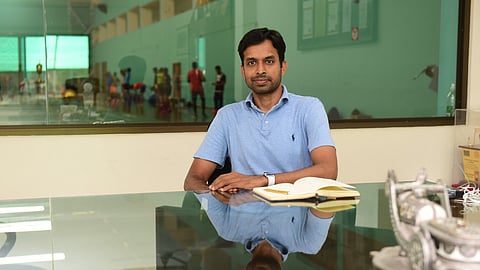

At the end of my badminton career, I had four knee surgeries and multiple fractures in my foot. My body was breaking down because it was pushed to the limit. My cortisol was through the roof, insulin and sugars and inflammation were high. I only looked fit outside,” recalls Pullela Gopichand, former All England champion and currently the Chief National Coach for the India national badminton team. Years of elite sport left a lasting impact on him, which became clear only after retirement, one of the reasons his most recent book, The Longevity Code (Penguin, ₹699), brings together his experience from elite badminton and medical insight on how high performance and long-term health sit in tension.
The book, co-authored with Dr Sophia Pathai, a physician-scientist working in ageing and chronic disease research, examines how health, performance and ageing interact across a lifetime to understand what builds resilience and what slowly breaks it down. The idea of the book came about during a conversation at his academy, where Gopichand met Pathai through a common friend. The discussion moved across his journey in sport and her work in medicine, gradually moving towards the idea of working together on a book. “I was sharing my journey, and we were discussing a range of ideas around performance and health. I felt I could have benefited from the knowledge she had and from my own experiences. Together, it felt relevant,” says the 52-year-old, who has guided Olympians like Saina Nehwal and PV Sindhu.
Gopichand traces much of the toll to the demands of performance sport. A diet driven by carb loading and pushing all the time had taken a toll and he had to reset before he could ‘actually be better’. “High performance and longevity need to be aligned. The demands of sports require you to train, eat and behave in a way which is not necessarily the healthiest for longevity,” he shares.
Critical of modern wellness culture, he notes that information overload often pushes people towards complicated solutions. “Everyone wants quick results,” he says. His take moves in the opposite direction. He believes long-term health lies in returning to fundamentals like purpose, sleep, sunlight, relationships and movement. “Go back to basics. We have gut bacteria, genetics, culture and centuries of wisdom,” he stresses that the idea is not to reject science, but to avoid overcomplicating what already functions well. The body responds best when life follows a steady natural rhythm, rather than constant tweaking and overloading.
Writing the book also changed his perspective, forcing him to reconsider how he saw effort and rest. “It was a learning experience – the ability to pull back and let go. The balance matters more than I earlier thought. It also brought older values back into focus. Purpose, relationships and gratitude have become more important,” he concludes.
