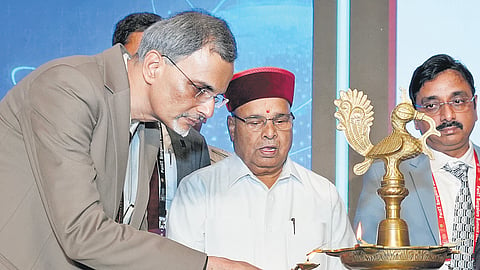

BENGALURU: Chief Economic Advisor (CEA) to the government of India, V Anantha Nageswaran, on Saturday termed the current period a defining moment in India’s economic and geopolitical journey. The country stands “at a fork, not a crisis”, he said, urging the country to act with urgency, strategic clarity and institutional confidence to secure its place in a rapidly changing global order.
Artificial intelligence (AI) would shrink routine entry-level jobs, he warned, stressing the need to create at least eight million skilled professions.
Delivering the inaugural keynote address at the PanIIT Bangalore Summit 2026, he said India’s potential “is not a given” and would depend on collective decisions taken by governments, institutions, industry leaders and citizens over the next two decades.
Addressing policymakers, entrepreneurs, technologists and investors, he highlighted growing global uncertainties, including intensifying great-power competition, fractures within Western alliances and China’s manufacturing dominance. He noted that India’s goods trade deficit remained structurally high and warned that global capital flows were becoming more selective in a high interest-rate environment.
India must simultaneously strengthen labour-intensive sectors, such as garments, footwear and food processing, while accelerating investments in semiconductors, batteries, advanced electronics and speciality chemicals. On energy security,he called for faster adoption of nuclear energy and stronger strategic reserves to support India’s manufacturing ambitions.
He said AI will reduce routine cognitive jobs and narrow entry-level hiring, making skilled trades and technical expertise increasingly important. India needs nearly eight million new jobs or livelihoods annually, with electricians, technicians and construction workers expected to remain among the most resilient professions, he added.
After inaugurating the summit, Governor Thaawarchand Gehlot said innovation and technology will form the backbone of India’s ambition of becoming a developed nation by 2047. He called upon students, researchers, startups and industry leaders to align technological advancement with nation-building and inclusive growth.
