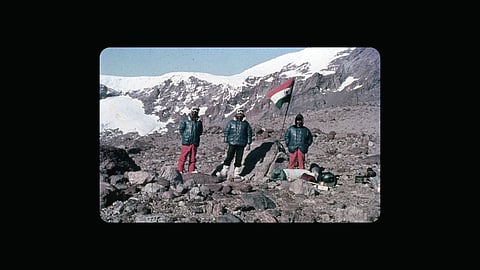

Braving the icy desert of Antarctica, around 43 years ago, a team of 81 Indian scientists, Army, Navy and Air Force personnel achieved something that had never been done before or since then: building a permanent research station in one Antarctic summer, a period of six months. “No country, including the US, Russia or China, had achieved what these guys were proposing on this trip. Permanent stations used to be built little by little over years, but there are multiple problems with that; it’s inefficient and sometimes, the previous years’ gets undone because of the ice. So it was an onerous task and they were given only a 15 per cent chance of success by experts. But they prevailed against all odds,” says filmmaker Santosh Saligram. He and collaborator Sourabha Rao, screened their documentary Miracle in Antarctica chronicling this historic feat in Indian science history, at BLR Design Centre, Church Street, on Sunday.
The station, built the same year as India signed the Antarctic Treaty, was India’s third expedition to the continent and was crucial because a permanent research station meant that Indian scientists could stay to continue their research throughout the inhospitable winter months. “Twelve nations had already signed the Antarctic Treaty which denounced any activity in Antarctica other than science and research. India wanted to be taken seriously in its capabilities in science and research, and share international space in the Antarctic discussion,” explains Saligram.

At the core of the documentary are interviews with three scientists: Harsh Kumar Gupta who led the mission, KJ Mathew and Ashok Hanjura, along with a few conversations with their family and friends, helping paint a picture of the people at the core of the mission. This was important to the duo since the project was born out of Gupta’s search for someone to do justice to the story, after being put off by Bollywood sensationalism, notes Rao, adding, “One part of the story is the science but the other is the scientists as people.”
Avoiding sensationalism doesn’t mean the story of the expedition has any dearth of excitement though, with Saligram sharing that one incident that kept resurfacing across interviews was a close brush with death soon after the scientists’ ship reached the Antarctic ice wall. “M18 helicopters were being used to transport cargo inland from the ship. On the third day, the helicopter crashed into the water and the five people inside had to break the plexiglass window at the bottom to escape,” he says, continuing, “While being rescued by a second helicopter, two people caught hold of the rope but did not sling it properly. Because their hands must have been freezing, they fell into the water again from a great height. You can actually see this in the footage in the documentary. It’s utterly terrifying. Eventually, they were rescued by a lifeboat, but because they were all scattered in different places, some came really close to knocking on death’s door because of hypothermia.”
Another moment that stands out to the duo is what came to light when the crew made it back to Indian shores, when Gupta found out that several team members had lost their toes to frostbite and hid the fact from him because they did not want to be told to stop work and sent back to the ship to rest.
Making a documentary on a subject 40 years in the past, comes with its own challenges, including a lack of footage. To get around this, the filmmakers decided to weave animated scenes in with the interviews from an old documentary which surfaced halfway through their process. “Dr Gupta remembered that there was one short documentary that the National Film Development Corporation had made. We used it to fill in the gaps alongside 2D animations by city-based animators, who matched the period drama visual aesthetic,” says Rao.
But why is it that more work chronicling Dakshin Gangotri does not exist? “Maybe we need to rethink our ideas of heroes. It still boggles our mind that this story wasn’t told until now,” notes Rao, with Saligram adding, “We have a collective dementia for our own achievements as Indians. I’m sure it would have made the media at that time because Indira Gandhi herself was behind the project and following it on a daily basis. But over time, it has been lost, partly because there isn’t a story which has been told attractively enough for it to stick in people’s memories.”