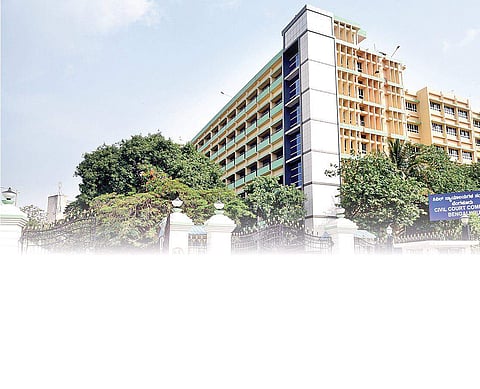

BENGALURU: A City Civil and Sessions Court observed that the misuse of Section 138 of the Negotiable Instruments Act and abuse of the enactment in cheque bounce cases is leading to voluminous litigation before the law courts.
It is also said that Section 138 is intended to promote commercial transactions, instil confidence in the banking system, and assure the protection of the genuine rights of the true litigants, but not to permit false prosecution leading to innocent people losing everything in life.
Judge K M Radhakrishna, LII Additional City Civil and Sessions Court, made these observations while dismissing the appeal filed by the complainant Chandrashekar V from Rajajinagar in the city against the acquittal of Raghuveera Shenoy from Udupi.
Confirming the acquittal of the accused by a magistrate on October 6, 2025, the court passed the order to issue summons to the complainant, directing him to submit a written explanation as to why he should not be directed to pay compensation to the accused for false and malicious prosecution as contemplated under Section 250 of CrPC.
The court noted that the initiation of false prosecution by the mischievous litigants, to exploit the innocent people with an intention to get unjust advantage, is a truly inhuman act of creating artificial liabilities.
It was alleged that the accused took a loan of Rs 2.50 lakh from the complainant on September 17, 2023, in cash and issued a cheque for the same amount, agreeing to repay it with 18 percent interest within four months.
The cheque was presented on February 1, 2024, for encashment, but it was dishonoured with an endorsement “payment stopped by the drawer.”
A case was registered under Section 138 of the NI Act against the accused, but the magistrate acquitted him. Against this order, an appeal was filed by the complainant before the sessions court. However, the counsel for both the parties were absent.
The accused contended that he had not issued any cheque to the complainant. He obtained Rs 2 lakh from his friend for his daughter’s marriage scheduled in December 2019 and issued four signed blank cheques to him as a security. He repaid it with Rs 8,000 interest on December 2019.
However, his friend did not return those blank cheques, saying that those were misplaced. Therefore, he gave stop payment instructions to the bank. However, his friend initiated false prosecution through the complainant, who claimed that the cheque was issued to him on September 17, 2023, but the call detail records of the mobile phone disclosed that the accused was not at all in Bengaluru on the said date; he was in Manipal, Udupi.
