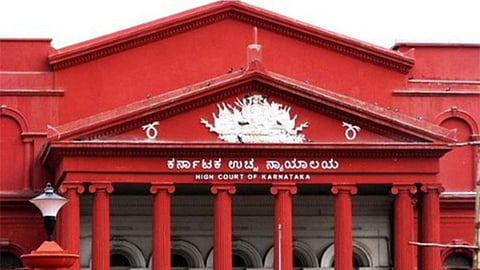

BENGALURU: The Karnataka High Court requested the state government to examine the need for suitable clarification for Rule 17A of the Karnataka Excise Licences (General Conditions) Rules, 1967, concerning the identification of legal heirs for transfer of licence in case of death of licensees, the effect of consent furnished by them for transfer, the treatment of disputed Wills and the circumstances in which adjudication by a civil court becomes necessary in case of dispute over transfer of license.
Justice Lalitha Kanneganti passed the order while disposing of the two petitions filed by Ashwatha Narayana Reddy and two others from the city, questioning the order dated September 3, 2026, passed by the Deputy Commissioner of Excise, Bengaluru.
The court noted that Rule 17A of the Karnataka Excise Licences (General Conditions) Rules, 1967 entitles transfer upon the death of a licensee but does not expressly explain who is to be treated as a legal heir when competing claims arise under intestate succession and under a Will, nor does it adequately distinguish disagreement among admitted legal heirs from an objection raised by a person claiming through a testamentary disposition.
These are not merely questions of terminology; the absence of clear provisions can result in every objection being treated as a reason to direct the parties to the civil court.
“The rule does not provide for a comprehensive mechanism addressing this difficulty. Section 71 of the Karnataka Excise Act empowers the state government to frame rules.
The state government therefore consider whether Rule 17A of the Rules, 1967, requires further clarification concerning the identification of legal heirs, the effect of consent furnished by them, the treatment of disputed Wills and the circumstances in which adjudication by a Civil Court becomes necessary.
Consideration may also be given to the position of subsisting licence during prolonged succession disputes, while protecting public revenue and maintaining the regulatory requirements prescribed under the Act”, the court noted.
