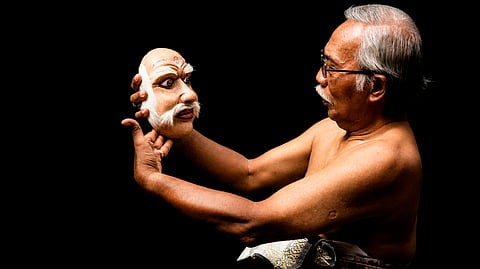

Raised in Singapadu, a Balinese village known for its performing arts, Padma Shri-awardee Wayan Dibia’s earliest lessons in dance kicked off with watching his father prepare for performances. A dancer, choreographer, scholar and teacher, the 78-year-old has been part of the Balinese performance culture, creating more than 150 works inspired by Indian epics. Dibia and his team are bringing several facets of Balinese performing arts to the city. The event, taking place till October 18, also includes workshops and lecture-demonstrations.
Much before he entered an art school, he learnt about the rituals and discipline that surrounded every performance at home. “Not only the technique, but also the habitual process of an artist. If they are preparing for a performance, an hour or two before it, they are already making preparations - conducting rituals, praying and then bringing their equipment together and calling the spirit to go,” he says, adding, “All of these things made me aware, not only the technique of dance, but also of the process that performers go through.”
Presented by Dibia and his team as part of Bali in Bengaluru, an idea conceptualised by musician Praveen D Rao, brings together Balinese dance, music, theatre, shadow puppetry and kecak.
His work draws from the Ramayana and Mahabharata. Dibia says Balinese artists acknowledge the Indian origins of the epics, while developing their own interpretations over generations. Balinese storytelling can follow the original narrative, borrow scenes while creating a different plot or retain only the names of characters and develop an entirely new dramatic story.

Dibia sees such process as a way to keep epics relevant while allowing them to speak to Balinese society. He asserts that the message of the epics lies in their exploration of dharma and adharma. Their characters do not always fit neatly into categories of good or evil, creating a more complex picture of human choices.
The known stories, however, are rarely reproduced without considering the present. Contemporary concerns can determine which characters and episodes come to the foreground. “We always create our stories based on the current situation. If people are talking about loyalty, we bring in the story of Hanuman as the messenger of Rama,” he says, adding that such reinterpretations require artists to remain attentive to their communities.
Among the forms being presented in Bengaluru is kecak, which Dibia hopes audiences will see beyond its popular association with monkeys. The form developed from trance-dance rituals later incorporating the Ramayana in the 1930s. Dibia hopes the performance will leave audiences with a deeper sense of the cultural links between the two countries. “I can see Bali here in a different way. This is a good thing for us to nurture in the future, to make this kind of exchange and widen the understanding between the Balinese and Indian people through our long cultural connection,” he smiles before signing off.